

High above the ground, where wind turbines harness clean energy from the wind, a hidden danger lurks that the wind industry rarely discusses openly. Wind turbine fires represent one of the most catastrophic risks in renewable energy operations, capable of destroying million-dollar equipment in hours and, in the worst cases, claiming human lives.
While the wind industry has made significant strides in safety protocols, turbine fires continue to pose complex challenges that traditional emergency response methods struggle to address. The combination of extreme height, remote locations, and limited escape routes creates a perfect storm of risk factors that can turn routine maintenance operations into life-threatening situations.
The sobering reality is that wind turbine fires occur more frequently than most people realize, with experts estimating that 91% of incidents go unreported. When these fires do happen, they often result in total loss of the turbine and can endanger the lives of maintenance personnel who may find themselves trapped high above the ground with no safe way to escape.
What Are Wind Turbine Fires and Why Do They Occur
A wind turbine fire is an outbreak of combustion within any component of a wind turbine, most commonly occurring in the nacelle – the housing atop the tower that contains the generator, gearbox, and associated electronics. These fires can also spread to the blades or occur in the engine room where electrical components are housed.
The primary causes of wind turbine fires fall into four main categories. Electrical faults represent the most common ignition source, occurring when failures in control systems, wiring, transformers, or switchgears generate arcing or overheating. A short circuit in these systems can instantly ignite flammable lubricants or insulation materials present throughout the nacelle.
Mechanical overheating presents another significant risk, particularly in components such as gearboxes and generators. When these parts overheat due to excessive friction, poor lubrication, or bearing failure, the generated heat can ignite adjacent oils or insulation materials. The nacelle often houses several hundred liters of lubricating oil and hydraulic fluid, creating substantial fuel loads that can sustain intense fires.
Lightning strikes pose a constant threat to wind turbines due to their height and isolated positioning. When lightning enters via the blades or directly strikes the nacelle, it can cause instant ignition if conditions are right. Despite lightning protection systems designed to provide low-resistance paths to ground, these strikes remain unpredictable and difficult to prevent entirely.
Hydraulic system failures also contribute to fire risk, especially when non-flame-retardant hydraulic fluids leak and encounter high temperatures or electrical fault sources. The combination of flammable fluids and ignition sources creates ideal conditions for rapid fire development.
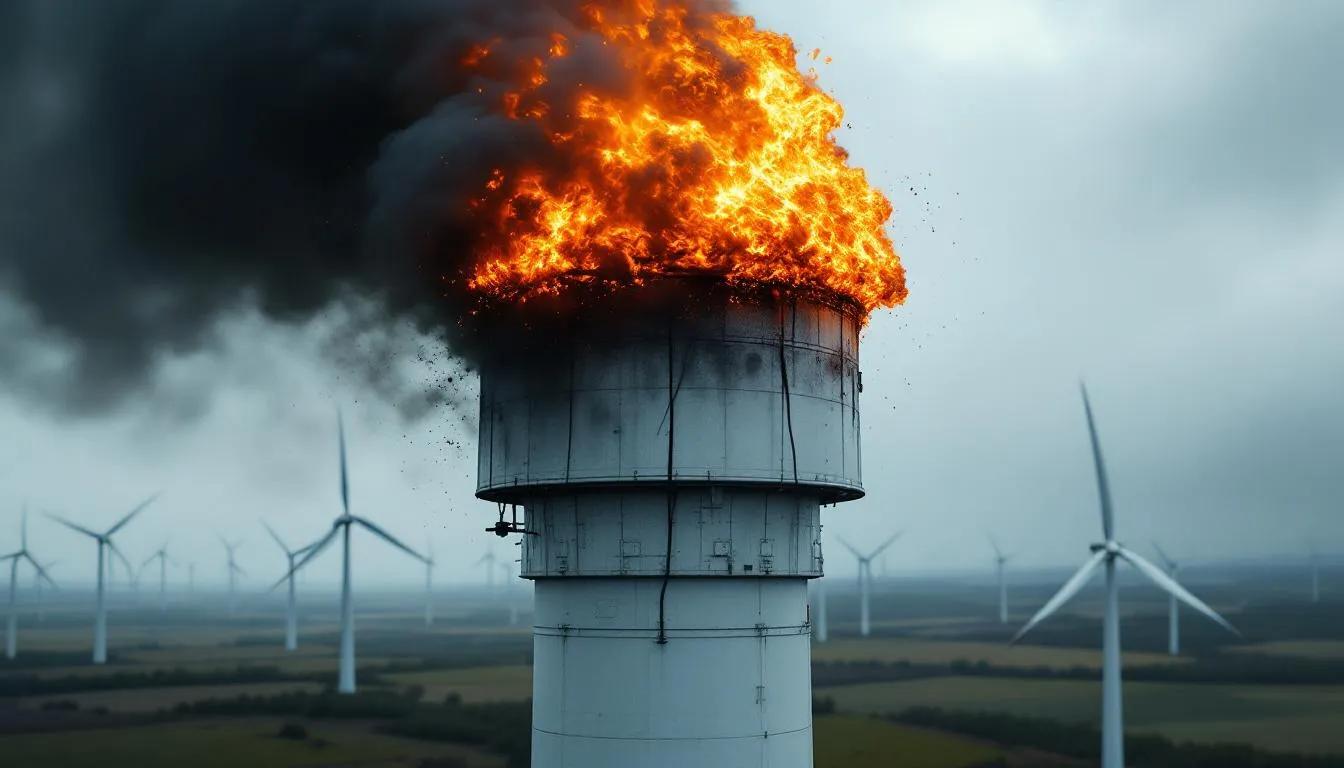
The 2013 Netherlands Tragedy: A Case Study in Wind Turbine Fire Dangers
On October 29, 2013, a tragic incident at the Piet de Wit Wind Farm in Ooltgensplaat, Netherlands, brought international attention to the deadly risks of wind turbine fires. Four technicians were performing routine maintenance on a Vestas V-66 turbine when disaster struck without warning.
The maintenance team was working inside the nacelle when a sudden fire broke out, believed to have started from an electrical short circuit. The blaze spread rapidly through the confined space, fed by oils and electrical components that created intense flames and thick smoke. While two of the engineers managed to escape safely by climbing down the turbine’s internal ladder, two engineers – aged 19 and 21 – became trapped at a height of 67 meters above the ground.
Emergency responders faced an impossible situation. The fire department arrived at the scene within hours, but their standard equipment proved insufficient to reach the trapped men. Firefighters had trouble extinguishing the blaze from below, and the intense heat and smoke made any rescue attempt from above extremely dangerous. A large crane was called to the scene, but it could not extend high enough to reach the nacelle safely.
The two men, faced with the choice between certain death from the flames or jumping to the ground, made the heartbreaking decision that would define this tragedy. A photograph taken during the incident showed one engineer embracing the other as they stood at the edge of the nacelle, silhouetted against the burning turbine. This image went viral worldwide, becoming a powerful symbol of the human cost of inadequate safety measures in the wind industry.
Both engineers died that day, their bodies later found on the ground below the turbine. The incident sent shockwaves through the wind industry and highlighted the urgent need for improved safety protocols and emergency escape systems. The company involved, along with regulatory authorities, was forced to confront the reality that existing safety measures were not sufficient to protect workers in such extreme circumstances.
This tragedy became a watershed moment that fundamentally changed how the industry approached safety in wind turbine maintenance. It demonstrated that the combination of height, fire, and limited escape routes could create situations where even the most experienced emergency responders would be powerless to help trapped workers.
Wind Turbine Fire Statistics and Frequency
The true scope of wind turbine fires worldwide remains largely hidden due to systematic underreporting, but available data reveals alarming patterns that the wind industry has been reluctant to acknowledge publicly. According to comprehensive research analyzing global incidents, fire accidents account for 14-15% of all reported wind turbine catastrophic accidents, making it the second leading cause after blade failure at 19%.
Between 1995 and 2012, researchers documented 200 fire incidents across wind farms globally. However, experts believe this represents only the tip of the iceberg. Studies suggest that approximately 91% of wind turbine fires are never formally reported in public datasets or press releases, meaning the actual number of incidents could be ten times higher than official records indicate.
The annual fire rate is estimated at approximately 1 fire per 1,710 turbines per year, though some sources suggest rates as high as 1 in 1,000 when accounting for underreported incidents. With over 350,000 wind turbines operating worldwide as of 2024, this translates to potentially hundreds of fires occurring annually that never make headlines.
When wind turbine fires do occur, the consequences are severe. Research indicates that 90% of nacelle fires result in total loss of the turbine or extended downtime requiring major repairs. The combination of extreme height, flammable materials, and limited firefighting access means that once a fire takes hold, it typically burns until the fuel is exhausted or the structure collapses.
|
Fire Statistics |
Value |
Impact |
|---|---|---|
|
Percentage of turbine accidents |
14-15% |
Second leading cause |
|
Documented fires (1995-2012) |
200+ |
Likely underreported by 10x |
|
Annual fire rate |
1 in 1,710 turbines |
Hundreds of incidents yearly |
|
Total loss rate |
90% |
Nearly all fires catastrophic |
|
Underreporting rate |
91% |
True scale largely hidden |
The geographic distribution of fires varies significantly, with some regions experiencing higher rates due to factors such as lightning frequency, equipment age, and maintenance standards. Offshore wind farms face additional challenges, as the marine environment and limited access complicate both prevention and response efforts.
Perhaps most concerning is the trend in human casualties. While the 2013 Netherlands incident remains the most widely publicized tragedy involving human deaths from wind turbine fires, industry insiders acknowledge that other fatal accidents have occurred but received minimal public attention. The remote locations of many wind farms and the industry’s preference for handling incidents internally contribute to this information gap.
Firefighting Challenges and Safety Issues
Wind turbine fires present unique challenges that render conventional firefighting methods largely ineffective, creating complex safety issues that extend far beyond the immediate incident. The primary obstacle emergency responders face is the extreme height of modern wind turbines, which typically range from 60 to over 100 meters tall – well beyond the reach of standard fire department equipment.
Standard fire department ladder trucks can typically reach heights of only 30-40 meters, leaving a dangerous gap when attempting to combat fires in turbine nacelles. Even specialized aerial firefighting equipment struggles with the height and accessibility issues presented by wind turbine fires. The narrow access points and confined spaces within turbines further complicate rescue operations, as firefighters cannot easily maneuver their equipment or personnel into position.
The remote locations of most wind farms create additional complications for emergency response. Unlike urban fires where fire departments can typically reach the scene within minutes, wind farms are often located in rural areas where response times can extend to hours. This delay is critical because turbine fires typically develop rapidly, and the window for effective intervention may close before help arrives.
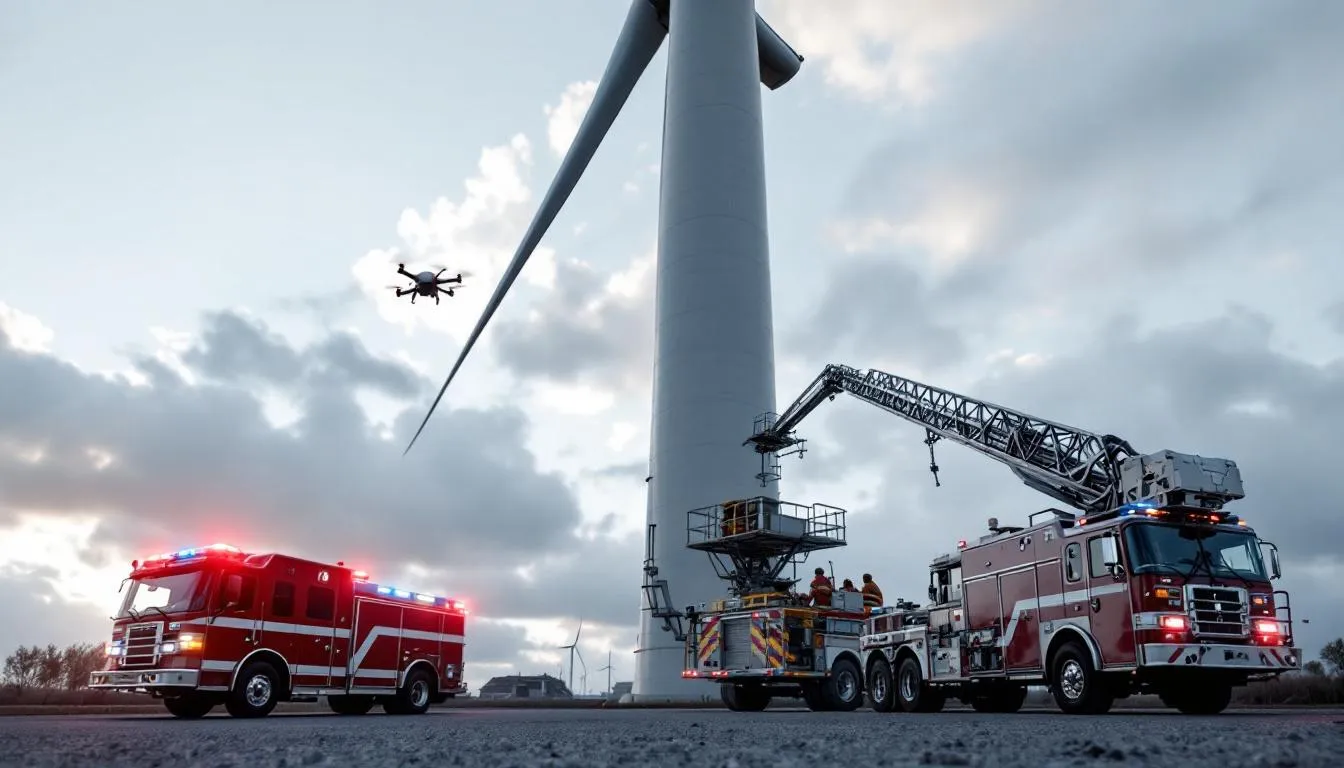
Weather conditions frequently affect rescue operations, as wind speeds that make turbines productive for energy generation can make aerial rescue attempts extremely dangerous. High winds can prevent helicopter operations and make crane-assisted rescues nearly impossible, leaving trapped personnel with limited options for escape.
Emergency Response Limitations
The specialized nature of wind turbine fires requires equipment and expertise that most local fire departments simply don’t possess. A specialized team with appropriate training and equipment is needed to effectively respond to these incidents, but such teams are rare and may be located hundreds of kilometers from the incident site.
Training deficiencies represent another critical safety gap. Many maintenance personnel receive basic fire safety training, but the unique challenges of escaping from a burning turbine at extreme height require specialized preparation that is often inadequate or entirely absent. The industry has been slow to develop and implement comprehensive emergency escape protocols that address the specific risks of turbine fires.
The lack of standardized safety equipment across different turbine manufacturers also complicates emergency response. Some turbines are equipped with internal fire suppression systems, while others rely solely on external firefighting capabilities. This inconsistency means that emergency responders cannot assume what safety features may be available at any given incident.
The risk of secondary fires adds another layer of complexity to wind turbine fire response. Burning debris falling from turbines can ignite ground fires, particularly in dry grassland areas where many wind farms are located. This risk is especially acute during drought conditions, when a single turbine fire can spark widespread wildfires that threaten entire regions.
Water supply limitations at remote wind farm locations further hamper firefighting efforts. Unlike urban areas with robust water infrastructure, wind farms often lack sufficient water sources for sustained firefighting operations. Fire departments may need to transport water over long distances, delaying response and limiting the duration of suppression efforts.
Fire Prevention and Suppression Technologies
The wind industry has invested heavily in developing fire prevention and suppression technologies specifically designed to address the unique challenges of turbine fires. These systems must operate reliably in harsh environmental conditions while remaining accessible for maintenance despite the extreme heights involved.
Automatic fire detection systems represent the first line of defense against turbine fires. Modern wind turbines are increasingly equipped with sophisticated sensor networks that can detect smoke, rapid temperature increases, or flame presence within the nacelle. These systems can trigger immediate turbine shutdown and alert operators to potential fire conditions before they escalate beyond control.
Advanced monitoring systems go beyond simple fire detection, using thermal imaging cameras and temperature sensors to identify hot spots that could indicate impending mechanical failures. By detecting overheating components before they reach ignition temperatures, these systems can prevent many fires from starting in the first place.
Firetrace and similar automatic suppression systems have emerged as particularly effective solutions for wind turbine applications. These systems use specialized tubing that ruptures when exposed to fire, automatically releasing suppression agents directly onto the flames without requiring external power or water supplies. The self-activating nature of these systems makes them ideal for remote turbine applications where immediate human response may not be possible.
Enhanced electrical safety systems, including arc fault detection circuits, can identify dangerous electrical conditions before they result in fires. These systems monitor electrical currents and can detect the characteristic signatures of arcing that often precede electrical fires, automatically shutting down affected circuits to prevent ignition.
Regular thermal imaging inspections have become standard practice for identifying potential fire hazards before they develop into actual fires. These inspections can reveal overheating components, electrical hot spots, or other conditions that increase fire risk, allowing for preventive maintenance that eliminates ignition sources.
The development of flame-retardant materials specifically for wind turbine applications has also advanced significantly. New hydraulic fluids, insulation materials, and composite components are designed to resist ignition and slow fire spread, providing crucial additional time for suppression systems to activate and for personnel to escape safely.
Some manufacturers have begun installing emergency escape systems, including controlled descent devices that allow trapped personnel to safely evacuate from the nacelle even when the internal ladder is blocked by fire or smoke. While these systems add cost and complexity to turbine design, they provide critical life safety benefits that the 2013 Netherlands tragedy demonstrated were desperately needed.
Financial and Operational Impact of Wind Turbine Fires
The financial consequences of wind turbine fires extend far beyond the immediate replacement costs, creating ripple effects that impact wind farm profitability for years after an incident. Individual turbine replacement costs typically exceed $1 million for onshore installations, with offshore turbines costing up to three times more due to the complex logistics of marine installation and the need for specialized vessels and equipment.
The immediate revenue impact begins the moment a turbine catches fire and continues throughout the replacement process. Modern wind turbines generate daily revenues of $1,500 to $2,000 under typical operating conditions, meaning that even brief outages result in significant lost income. When a fire results in total loss requiring complete turbine replacement, the downtime can extend for months while new equipment is ordered, delivered, and installed.
Insurance implications represent a growing concern for wind farm operators as fire incidents accumulate in industry databases. Insurance companies have begun implementing stricter requirements for fire protection systems and maintenance protocols, with some insurers refusing coverage for turbines lacking adequate fire suppression capabilities. Premium increases following fire incidents can add hundreds of thousands of dollars to annual operating costs.
The business case for investing in fire protection systems has become increasingly compelling as operators recognize the true cost of turbine fires. While comprehensive fire detection and suppression systems can add $50,000 to $100,000 to the initial cost of each turbine, this investment is typically recovered within the first year of operation through reduced insurance premiums and improved reliability.
|
Cost Component |
Typical Range |
Impact Duration |
|---|---|---|
|
Turbine replacement |
$1-3 million |
One-time |
|
Daily revenue loss |
$1,500-2,000 |
Months |
|
Insurance premium increase |
10-25% annually |
Years |
|
Fire protection systems |
$50,000-100,000 |
One-time investment |
|
Emergency response costs |
$25,000-75,000 |
Per incident |
Secondary costs include environmental remediation when turbine fires spread to surrounding areas, legal liability for damage to neighboring properties, and the opportunity costs of delayed expansion plans while operators address fire-damaged assets. The reputational impact can also affect future financing and development opportunities, as lenders become increasingly sophisticated in evaluating operational risk factors.
The offshore wind sector faces particularly severe financial impacts from fires due to the extreme difficulty and cost of accessing turbines in marine environments. A single offshore turbine fire can cost upwards of $5 million when specialized vessels, weather delays, and extended downtime are factored into the total impact.
Forward-thinking operators have begun treating fire protection as a strategic investment rather than a regulatory requirement. Companies that proactively implement comprehensive fire safety programs often find that the reduced insurance costs, improved uptime, and enhanced safety reputation more than justify the initial expenditure.
Industry Response and Future Safety Measures
The wind industry’s response to high-profile fire incidents has accelerated significantly since the 2013 Netherlands tragedy, with manufacturers, operators, and regulators working to implement comprehensive safety improvements across all aspects of turbine design and operation. This coordinated effort represents one of the most significant safety initiatives in renewable energy history.
Improved turbine design standards now incorporate fire safety as a fundamental consideration rather than an afterthought. New turbine models feature enhanced compartmentalization to prevent fire spread, improved ventilation systems to remove heat and smoke, and standardized mounting points for fire suppression equipment. These design improvements are being retrofitted to existing turbine fleets wherever technically feasible.
Enhanced evacuation systems have become a priority focus, with manufacturers developing multiple emergency escape options for maintenance personnel. These include controlled descent devices that allow safe evacuation even when internal ladders are compromised, external escape pods that can be lowered to safety, and emergency communication systems that maintain contact with trapped workers even when primary systems fail.
Better coordination between wind farm operators and local emergency services has emerged as a critical success factor in reducing fire casualties. Progressive operators now provide specialized training to local fire departments, conduct regular emergency response drills, and maintain detailed emergency response plans that account for the unique challenges of turbine fires.
Regulatory developments are accelerating across multiple jurisdictions as governments recognize the need for specific wind turbine fire safety standards. New regulations address everything from mandatory fire suppression systems to enhanced training requirements for maintenance personnel, creating a more consistent safety framework across the industry.
Investment in research for next-generation fire suppression technologies continues to expand, with promising developments in areas such as:
-
Wireless fire detection networks that provide instant notification across entire wind farms
-
Rapid-deployment suppression systems that can be activated remotely within seconds of fire detection
-
Advanced materials that self-extinguish when exposed to fire, eliminating the fuel source for continued combustion
-
Artificial intelligence systems that can predict fire risk based on equipment condition and environmental factors
The industry has also begun sharing fire incident data more openly, recognizing that transparency is essential for developing effective prevention strategies. Anonymous reporting systems allow operators to share lessons learned without fear of liability, creating a collaborative approach to safety improvement that benefits the entire wind industry.
Looking ahead, industry experts predict that fire safety will become a standard differentiator in turbine procurement decisions. Operators are increasingly willing to pay premium prices for turbines with superior fire safety features, recognizing that the long-term cost savings justify higher initial investments.
The tragedy that occurred in the Netherlands served as a wake-up call that transformed how the wind industry approaches safety. While the two men who died that day cannot be brought back, their sacrifice has driven improvements that will protect countless future workers from similar fates. The industry’s commitment to learning from this tragedy and implementing meaningful safety improvements represents the best tribute to their memory.
As wind energy continues its rapid global expansion, the lessons learned from turbine fire incidents will play a crucial role in ensuring that this clean energy source can be developed safely and sustainably. The combination of improved technology, better training, enhanced emergency response capabilities, and strengthened regulatory oversight provides reason for optimism that future fire incidents can be both prevented and managed more effectively when they do occur.


