When it comes to renewable energy sources, wind power has become one of America’s most impressive success stories. The landscape of US electricity generation has transformed dramatically over the past two decades, with massive wind projects now dotting the plains of Texas, the mountain passes of California, and the rolling hills of the Pacific Northwest.
Understanding which wind farms lead the pack—and why they matter—gives you a clear picture of where American clean energy is heading. In this comprehensive guide, you’ll discover the largest wind farms in the US ranked by installed capacity, learn about the key developers driving these energy projects, and explore what the future holds for wind power capacity in America.
Quick answer: what is the biggest wind farm in the US?
The Alta Wind Energy Center (also known as the Mojave Wind Farm) in Kern County, California holds the title as the biggest wind farm in the US. With approximately 1,550 MW of installed capacity spread across roughly 600 wind turbines, this massive installation dwarfs most other wind projects in North America.
The Alta Wind Energy Centre reached full commercial operation through multiple phases built between 2010 and 2013, with development led by Terra Gen Power. The project’s power is sold under a 25-year power purchase agreement to Southern California Edison, providing long-term revenue stability for the project and reliable clean energy for millions of California residents.
This quick answer gives you the essential facts. Below, you’ll find detailed rankings and analysis of all the largest wind farms operating in the US today.
Largest wind farms in the US ranked by installed capacity
This section ranks the biggest onshore wind farms in the US by nameplate capacity in megawatts (MW), focusing on projects exceeding roughly 650-700 MW. These represent the true giants of American wind energy, each capable of generating enough electricity to power hundreds of thousands of homes.
Projects are listed from largest to smallest, and you should note that capacities are approximate because ongoing upgrades and repowering can shift exact figures. All facilities listed here are onshore installations—offshore wind farm development in the US is still relatively new, with the first offshore wind farm only coming online in recent years.
|
Wind Farm |
State |
Capacity (MW) |
Full Commercial Operation |
|---|---|---|---|
|
Alta Wind Energy Center |
California |
~1,550 |
2010-2014 |
|
Western Spirit Wind |
New Mexico |
~1,050 |
2021-2022 |
|
Los Vientos Wind Farm |
Texas |
~912 |
2012-2016 |
|
Shepherds Flat Wind Farm |
Oregon |
845 |
2012 |
|
Roscoe Wind Farm |
Texas |
~781 |
2009 |
|
Horse Hollow Wind Energy Center |
Texas |
~735 |
2006 |
|
Capricorn Ridge Wind Farm |
Texas |
~662 |
2007-2008 |
Alta Wind Energy Center (California)
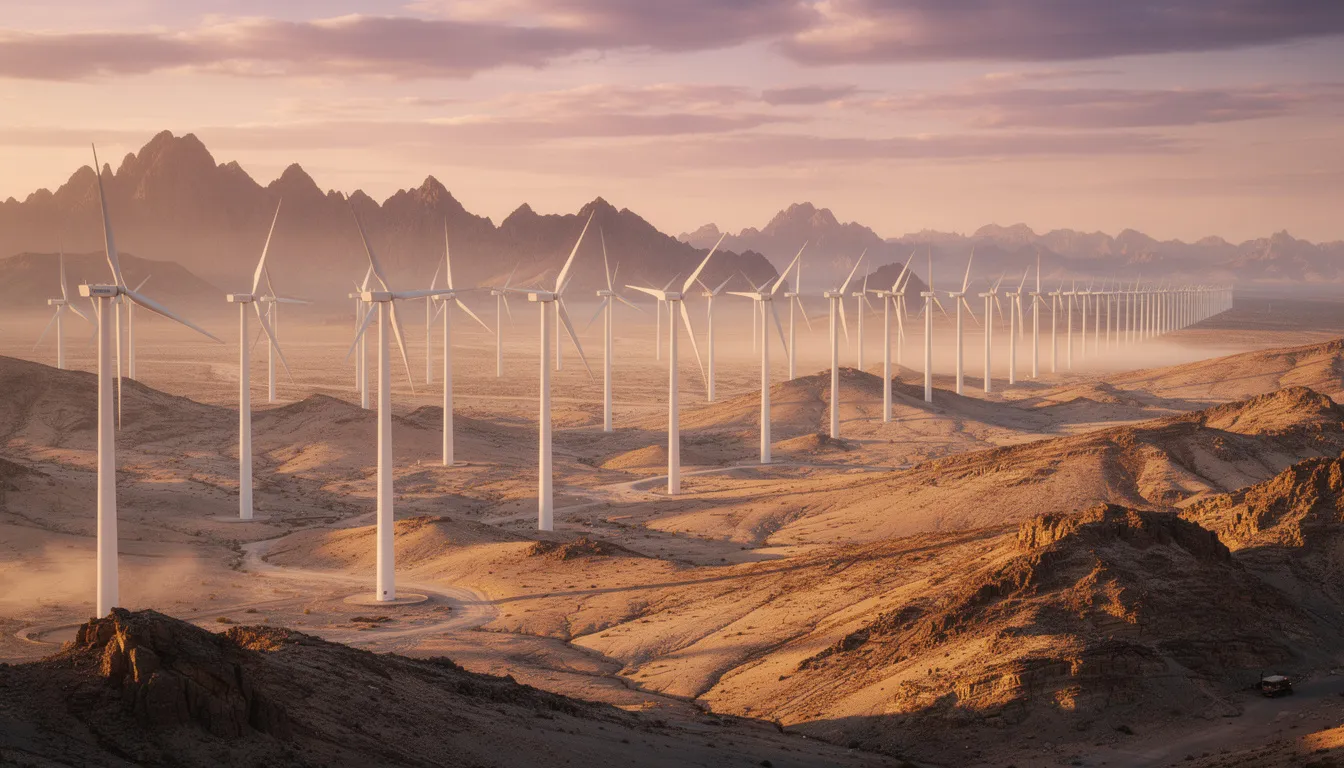
The Alta Wind Energy Center stands in the Tehachapi Pass of Kern County, California, commanding the title of largest US wind farm with approximately 1,550 MW of installed capacity. This impressive scale makes the Alta project a cornerstone of California’s renewable energy portfolio.
Terra Gen Power developed the project through 11 main phases built roughly between 2010 and 2014. The facility is sometimes referred to as the Mojave Wind Farm due to its location in the Tehachapi Mountains near the Mojave Desert. Modern Vestas turbines and equipment from other turbine manufacturers capture the consistent winds that flow through this historic wind corridor.
The Alta Wind Energy Centre sells its power generated to Southern California Edison under a long-term 25-year PPA, demonstrating the kind of contract stability that makes large wind projects financially viable. In 2024, regulators approved plans for a 150 MW-class battery storage system to be co-located with the project, reflecting the growing trend of pairing wind with storage.
Key figures for Alta Wind Energy Center:
-
Combined installed capacity: ~1,550 MW
-
Turbine count: Approximately 600
-
Development phases: 11 phases across four phases of major construction
-
Site area: Tens of thousands of acres
-
Construction employment: Thousands of jobs during peak building
-
Local economic impact: Significant tax revenue for Kern County
Western Spirit Wind (New Mexico)
Western Spirit Wind ranks as the second largest wind farm in the US, a multi-site project in central New Mexico with approximately 1,050 MW of total capacity. The project reached commercial operation around late 2021 and early 2022, making it one of the newest mega-scale wind developments in North America.
The facility consists of four distinct wind sites spread across Torrance, Lincoln, and Guadalupe counties, originally developed by Pattern Energy. What makes Western Spirit particularly notable is its dedicated transmission infrastructure—the Western Spirit Transmission Line connects the project into the New Mexico grid and enables power delivery throughout the Southwest.
This project stands out as one of the largest single-phase wind developments in the Americas. Beyond electricity generation, Western Spirit has driven substantial job creation and delivers ongoing lease income to local landowners, boosting the local economy in rural New Mexico communities.
Los Vientos Wind Farm (Texas)
The Los Vientos Wind Farm stretches across Starr and Willacy counties in South Texas, boasting roughly 910-912 MW of installed capacity completed across five phases. This makes it one of the largest wind farm projects in the Lone Star State.
Duke Energy Renewables developed the complex, with the first phase entering commercial operation around December 2012. Subsequent phases followed over the next several years, with the final phase reaching completion by approximately 2016. The project demonstrates how large wind farms often grow incrementally as developers secure financing and power contracts.
Los Vientos uses a diverse mix of equipment:
-
Siemens turbines across multiple phases
-
Mitsubishi Heavy Industries units
-
Vestas turbines in later additions
Power purchasers include CPS Energy (San Antonio’s municipal utility) and Austin Energy, both of which signed long-term PPAs. The project connects to the Electric Reliability Council of Texas (ERCOT) grid, feeding clean energy into the state’s deregulated electricity market.
Shepherds Flat Wind Farm (Oregon)
The Shepherds Flat Wind Farm in Morrow and Gilliam counties in northeastern Oregon delivers 845 MW of installed capacity, making it one of the largest wind projects in the Pacific Northwest. The project overlooks the scenic Columbia River Gorge region, capturing the strong winds that channel through this natural corridor.
Shepherds Flat uses 338 GE 2.5 MW-class turbines spread across the rolling agricultural landscape. The project created significant construction employment and carries an estimated cost of around $2 billion. Notably, it benefited from a substantial US Department of Energy loan guarantee of approximately $1.3 billion, reflecting federal support for large-scale renewable energy development. Caithness Energy played a key role in the project’s development.
The facility reached full commercial operation around 2012, with power delivered to Southern California Edison under long-term contracts. According to project estimates, Shepherds Flat generates enough electricity for roughly 235,000 homes annually while avoiding about 1 million metric tons of CO₂ emissions each year.
Roscoe Wind Farm (Texas)
The Roscoe Wind Farm spans Nolan County along with Mitchell and Scurry counties in West Texas, delivering approximately 781-781.5 MW of generating capacity. At the time of its completion, it briefly held the title of world’s largest wind farm.
This massive installation consists of 627 turbines from multiple turbine manufacturers including Siemens, Mitsubishi, and GE. Development proceeded through four phases between 2007 and 2009, demonstrating rapid construction capability in Texas’s wind-friendly regulatory environment.
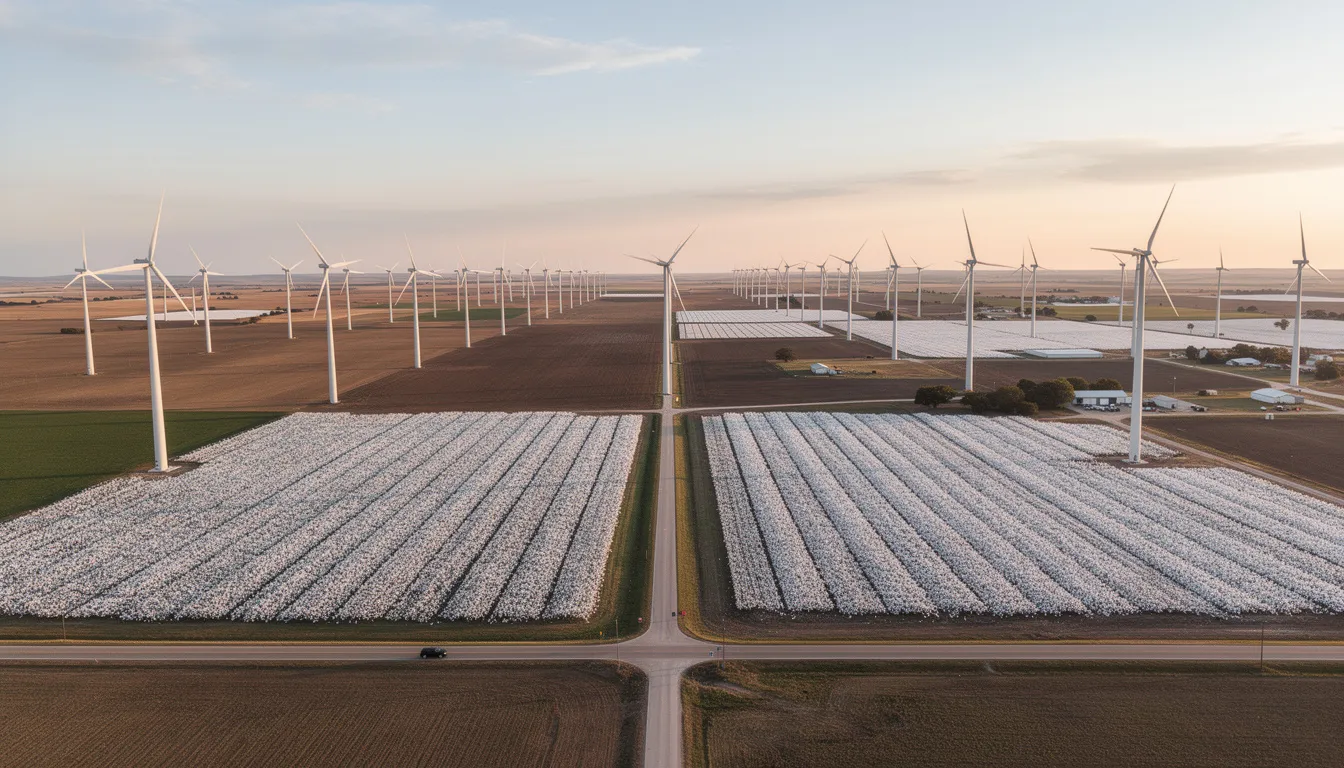
E.ON Climate & Renewables (now RWE) owns and operates the facility, which covers about 100,000 acres of traditional cotton-growing farmland. The project involves hundreds of landowners who continue farming between the turbines while collecting lease payments—a model that has proven successful across many farms in the United States.
Today, Roscoe Wind Farm continues powering hundreds of thousands of Texas households, contributing substantially to ERCOT’s growing wind generation portfolio.
Horse Hollow Wind Energy Center (Texas)
The Horse Hollow Wind Energy Center in Taylor and Nolan counties, Texas, delivers around 735.5 MW of installed capacity. When completed, it briefly claimed the title of world’s largest wind farm before being surpassed by Roscoe and later projects.
NextEra Energy Resources developed and continues to own the facility, which was built in three phases between 2005 and 2006. The project’s rapid construction timeline demonstrated that utility-scale wind development could proceed quickly with proper planning and infrastructure.
The wind farm uses a combination of turbine technologies:
-
Approximately 291 GE 1.5 MW turbines
-
Roughly 130 Siemens 2.3 MW units
-
Total site area: Around 47,000 acres
Horse Hollow generates enough electrical energy for roughly 180,000-220,000 homes, depending on wind conditions. The project established NextEra’s position as a dominant player in Texas wind development.
Capricorn Ridge Wind Farm (Texas)
Capricorn Ridge Wind Farm sits in Sterling and Coke Counties, Texas, with capacity in the mid-600 MW range—approximately 662.5 MW including multiple phases. The project represents one of the earlier large-scale wind developments in the region.
The third and fourth phases brought the project to its current scale, using a combination of GE 1.5 MW turbines and Siemens 2.3 MW models. First commercial operations began in 2007-2008, and NextEra Energy Resources owns the facility.
Capricorn Ridge holds historical significance as one of the first wind projects to generate and sell verified carbon offsets under standards such as the Verified Carbon Standard (VCS). This pioneering approach helped establish mechanisms for quantifying and trading the carbon emissions reductions from wind power.
The project contributes meaningfully to ERCOT’s wind generation while helping diversify the local economy in Coke Counties and Sterling County away from traditional oil and gas dependence.
Overview of wind power in the United States
US wind power has experienced remarkable growth from the late 2000s through the mid-2020s, transforming from a niche technology into one of the largest sources of renewable electricity. Today, wind ranks alongside hydropower and solar as a cornerstone of America’s clean energy portfolio.
By the mid-2020s, total installed capacity across US wind projects exceeds 150 GW, generated by more than 73,000 operational wind turbines nationwide. These figures continue evolving as new projects come online and older facilities undergo repowering with larger, more efficient equipment.
Wind’s share of total electricity in the United States has climbed steadily, with wind now supplying close to a tenth of US power generation in recent years. In leading states like Texas, Iowa, and Oklahoma, wind often provides 30% or more of annual electricity generation—a transformation that seemed unlikely just two decades ago.
According to the Energy Information Administration, wind energy has grown faster than almost any other electricity source over the past 15 years. The American Wind Energy Association (now the American Clean Power Association) has tracked this growth, documenting how policy support, falling costs, and improved technology combined to make wind power increasingly competitive.
Key developers behind the biggest US wind farms
A handful of major companies develop and own most of the largest US wind projects. These organizations combine utility-scale experience, sophisticated financing capabilities, and the ability to secure long-term power contracts that make billion-dollar projects feasible.
NextEra Energy Resources stands as the largest US wind and solar generator, headquartered in Juno Beach, Florida. The company owns Horse Hollow and Capricorn Ridge Wind Farm, among many other facilities, and operates primarily in ERCOT and other high-wind regions. NextEra’s scale allows it to achieve some of the lowest levelized costs in the industry—around $30-40 per MWh for new projects.
Terra Gen Power developed and owns the Alta Wind Energy Center, specializing in large-scale wind and storage projects across the Western US. The company’s focus on the Tehachapi Pass region has made it the steward of America’s single largest wind installation.
Duke Energy Renewables developed the Los Vientos phases in South Texas, employing a strategy of signing PPAs with municipal utilities and cooperatives like CPS Energy. This approach provides revenue certainty while serving public power customers.
Other notable developers include:
-
E.ON/RWE operates Roscoe Wind Farm and has invested heavily in Texas wind
-
Pattern Energy developed Western Spirit Wind and is advancing the massive SunZia project
-
Caithness Energy was instrumental in developing Shepherds Flat Wind Farm in Oregon
Which US states host the largest wind farms?
The biggest single wind farms in the US cluster in a handful of high-resource states where consistent winds, available land, and supportive policies align. Texas, California, New Mexico, and Oregon lead the nation in hosting truly massive individual installations.
Texas stands as the undisputed national leader by overall wind power capacity and sheer number of wind turbines. The state hosts multiple gigawatts of large projects including Roscoe, Horse Hollow, Capricorn Ridge, and Los Vientos. With over 42 GW of installed capacity and more than 700 wind projects, Texas generates more wind energy than most countries. The state’s Competitive Renewable Energy Zones (CREZ) transmission investment of $6.9 billion unlocked vast wind resources in the Panhandle and West Texas.
California claims the Alta Wind Energy Centre and the broader Tehachapi Pass wind region, historically one of the first large wind corridors developed in the US. The Tehachapi Mountains create ideal conditions for wind capture, and developers have operated turbines in this area since the 1980s at Tehachapi Pass and other locations.
New Mexico hosts Western Spirit Wind, demonstrating how interior Western states with excellent wind resources are becoming hubs for utility-scale development. The state’s winds regularly exceed 8 m/s, providing consistent generation.
Oregon contributes Shepherds Flat, illustrating Pacific Northwest potential. The Columbia River Gorge channels strong winds that make this region attractive for large-scale development.
It’s worth noting the contrast between states hosting a few enormous projects versus states like Iowa and Kansas that have many smaller or medium-sized wind farms in the United States spread across their landscapes.
Benefits of large wind farms in the US
Large wind farms deliver substantial benefits across multiple dimensions—environmental, economic, and operational. These mega-projects contribute meaningfully to decarbonization goals, enhance grid reliability through geographic diversity, and help diversify the US energy mix away from fossil fuels.
Economic benefits
The economic impact of major wind farms extends far beyond electricity generation:
-
Construction jobs: Projects like Alta created thousands of construction positions during building phases
-
Permanent operations jobs: Each large facility requires ongoing maintenance staff, typically 0.5-1 job per MW
-
Landowner payments: Rural landowners receive $5,000-10,000 per MW annually in lease payments
-
Tax revenue: Counties hosting wind farms receive significant property and sales tax revenue, often transforming rural budgets
-
South Texas and West Texas communities have seen particular benefits from wind development
Environmental benefits
From a climate change perspective, large wind farms deliver meaningful carbon footprint reductions:
-
Avoided CO₂ emissions: Top facilities offset millions of tons annually (Shepherds Flat alone avoids ~1 million metric tons yearly)
-
Reduced air pollution: Wind displaces coal and gas generation, cutting sulfur, nitrogen, and particulate emissions
-
Minimal water use: Unlike thermal plants, wind requires virtually no water for operation
-
The New York Times and other major outlets have documented these environmental gains extensively
Land use compatibility
Most wind farms in the US coexist effectively with agricultural operations. Farmers and ranchers continue growing crops and grazing cattle between turbines, often using higher altitudes for wind capture while maintaining ground-level activities. This dual-use model makes wind development attractive for rural communities seeking additional income without sacrificing productive farmland.
Future outlook for big wind farms in the US
The trajectory for large-scale wind development in the US points toward continued expansion through several pathways: repowering existing projects with larger turbines, building new multi-hundred-MW installations across the Midwest and Great Plains, and rapid growth of offshore wind capacity.
Repowering older wind farms has become increasingly common. Projects like Roscoe, built with 1.5-2 MW turbines, can now install 4-6 MW replacements on existing pads, sometimes doubling output without additional land disturbance.
Emerging mega-projects signal ongoing onshore growth:
-
SunZia Wind in New Mexico: At 3,500 MW when complete, it will likely become the Western Hemisphere’s largest wind installation
-
Planned additions across Wyoming, Oklahoma, and Texas continue expanding the fleet
Offshore wind is poised to rival onshore mega-projects in scale. The first offshore wind farm in US waters demonstrated technical viability near Rhode Island, and multi-gigawatt Atlantic coast projects are advancing rapidly. While today’s largest wind farms remain on land, offshore capacity factors exceeding 50% make coastal development increasingly attractive.
Transmission expansion remains critical. Projects like Western Spirit’s dedicated transmission line demonstrate how infrastructure investment enables remote high-capacity developments to connect with demand centers. The Department of Energy estimates the US needs 20% more transmission capacity to fully utilize available wind resources.
From Alta’s pioneering 1,550 MW installation through emerging offshore developments, American wind power continues setting new records. The combination of federal Inflation Reduction Act tax credits, advancing technology, and growing climate concerns suggests that today’s largest wind farms may seem modest compared to what’s coming over the next decade.
Whether you’re tracking energy investments, researching how many wind farms power American homes, or simply curious about where the country’s clean energy originates, these mega-projects represent both current achievement and future potential. The biggest wind farms in the US have proven that renewable energy can operate at utility scale—and the industry is just getting started.