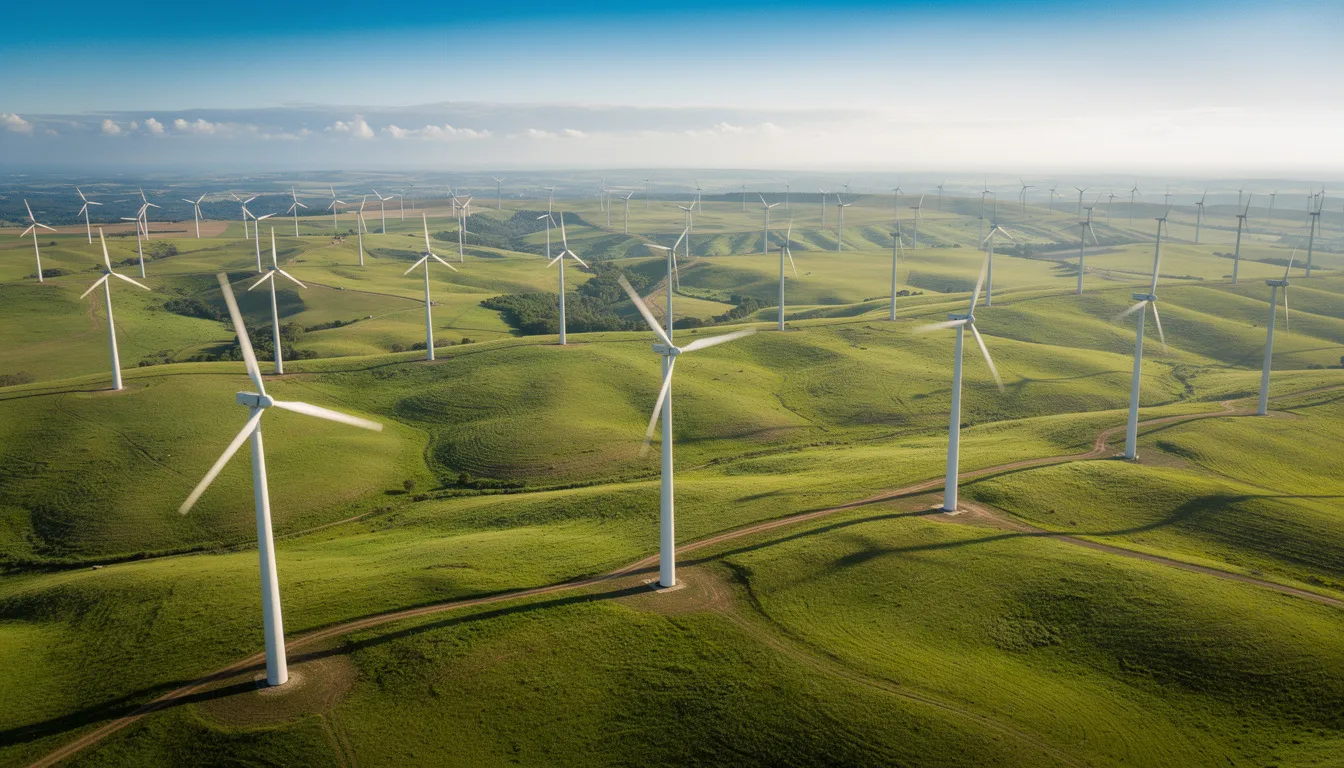
When you see those towering white turbines spinning on a hillside or rising from the ocean, you’re looking at one of the fastest-growing sources of electricity on the planet. But what do wind farms actually do, and how do they fit into our energy systems?
In this guide, we’ll break down exactly how wind farms work, where they’re built, and what they mean for the environment, local communities, and the future of power generation. Whether you’re curious about renewable energy or evaluating wind’s role in the global energy transition, this article covers what you need to know.
Quick answer: what do wind farms actually do?
Wind farms generate electricity by grouping many wind turbines together in one location, functioning like a power plant that runs on moving air instead of coal, gas, or nuclear fuel. Each turbine captures the kinetic energy in the wind and converts it into electrical energy. The farm as a whole feeds this power into the national electricity grid, where it travels to homes and businesses.
To understand the scale involved, consider the Gansu Wind Farm in China, which is targeting an installed capacity of 20,000 megawatts—enough to rank among the largest power plants of any kind on Earth. In the UK, Hornsea 1 generates 1,200 MW from 174 offshore wind turbines in the North Sea.
Modern wind farms can power hundreds of thousands to millions of homes while producing almost no direct greenhouse gas emissions during operation. Once installed, they generate power whenever the wind blows, without burning fossil fuels or consuming water.
What is a wind farm? (Definition and types)
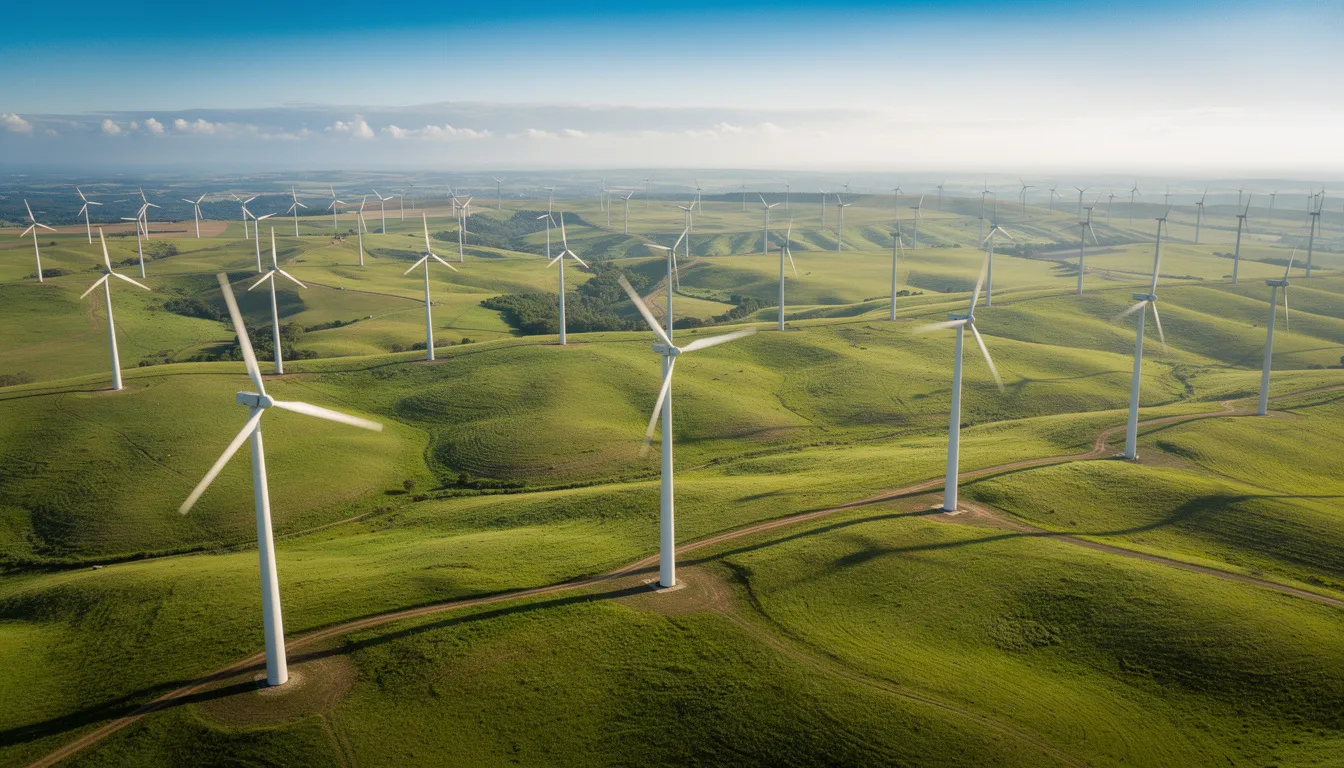
A wind farm, sometimes called a wind park or wind power plant, is a cluster of wind turbines installed in the same area and designed to generate electricity for the power grid. These turbines share infrastructure like access roads, underground cables, and substations, operating as a single coordinated generating facility.
Wind farms fall into two main categories. Onshore wind farms are built on land—often on ridges, plains, or agricultural areas where wind speeds are consistently high. Offshore wind farms are constructed in coastal waters, typically on fixed foundations in shallow seas or on floating platforms in deeper areas.
The Alta Wind Energy Center in California’s Tehachapi Mountains produces approximately 1,550 MW from hundreds of onshore turbines, making it one of the largest land based wind installations in the world. Hornsea 1 in the UK holds a similar distinction for offshore wind energy, with 1,200 MW of capacity spread across the North Sea.
Wind farms range dramatically in size. Some small wind projects feature just a handful of turbines producing a few megawatts. Others span thousands of hectares with hundreds of turbines. China’s Gansu project, when complete, will have tens of thousands of megawatts of planned capacity.
One often-overlooked fact about onshore wind farms is that the land between turbines typically remains productive. Farmers continue to grow crops and graze cattle around the foundations, with only a small fraction of the total area occupied by infrastructure.
How do wind farms generate electricity?
The basic physics behind wind power is straightforward. Moving air carries kinetic energy—motion energy stored in the mass and speed of the wind. When wind blows against turbine blades, it transfers some of that energy, causing the blades to spin.
This rotation drives a generator inside the nacelle (the housing at the top of the tower). Inside the generator, magnets spin within coils of wire, creating an electrical current through electromagnetism. It’s the same principle used in conventional power plants, except wind replaces steam or flowing water as the force that spins the generator.
Modern wind turbines consist of a few key components:
-
Blades: Usually three, designed like aircraft wings to generate lift and rotate the rotor
-
Nacelle: The box at the top containing the gearbox, generator, and control systems
-
Tower: A steel tube typically 80–150 meters tall that positions the rotor in stronger, steadier wind flow
-
Foundation: Concrete and steel anchoring the structure to the ground or seabed
Utility scale wind turbines on land typically produce between 2 and 6 MW each. Offshore wind turbines have grown even larger, with modern turbines reaching 8 to 15+ MW—a single wind turbine of this size can power several thousand homes in good wind conditions.
When many turbines work together in a wind farm, their combined output becomes more stable. Individual turbines might see gusts and lulls, but across dozens or hundreds of machines spread over several kilometers, these fluctuations smooth out, making the farm’s total power generation more predictable.
How wind farms work as power plants
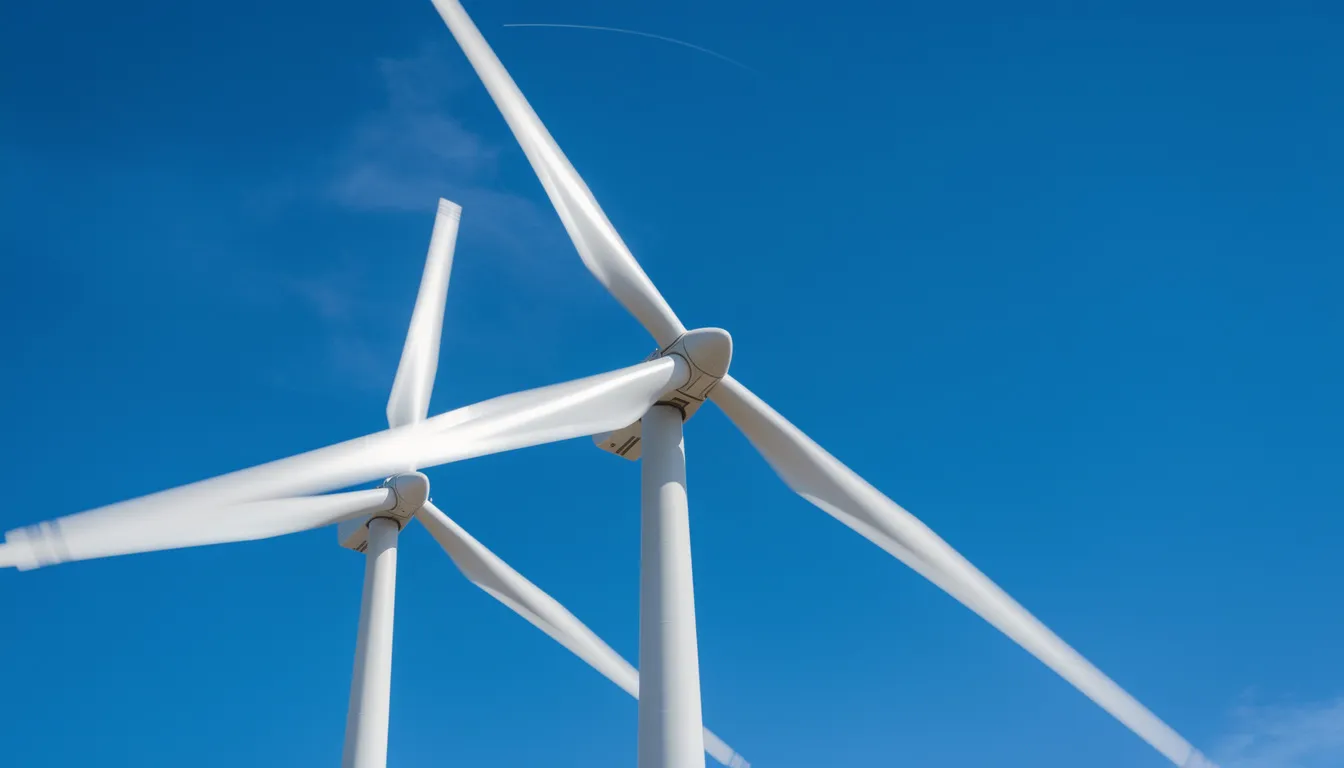
A wind farm operates much like a conventional power station, just with turbines instead of boilers. Dozens or hundreds of individual wind turbines connect through a network of underground power cables to one or more substations on site.
The electricity generated by each turbine travels down the tower through cables, typically at medium voltage (around 33–66 kV). These cables run underground across the wind farm to a central substation, where transformers step up the voltage for efficient long-distance transmission—often to 110–400 kV.
For offshore wind farms, the process adds an extra step. Power from individual turbines flows to an offshore substation, then travels via submarine cables to a connection point on land. Projects like those in the North Sea may run cables dozens of kilometers across the seabed before reaching the national electricity grid.
Utility scale wind farms typically operate under long-term power purchase agreements with utilities, large corporations, or government entities. These contracts provide revenue certainty for developers while guaranteeing buyers a fixed supply of renewable energy.
Most wind farms have an expected operating life of 20–25 years. During this time, technicians perform regular maintenance—inspecting blades, replacing worn components, and updating software—to keep turbines running safely and efficiently. After two decades, owners must decide whether to extend the project’s life, repower with newer turbines, or decommission entirely.
Where are wind farms located and why?
Wind farms are now found on every continent except Antarctica. The largest concentrations of installed capacity are in China, the United States, Germany, India, and the UK. Brazil, Vietnam, and other emerging markets are expanding rapidly.
Several factors determine where wind farms are built:
|
Factor |
Why It Matters |
|---|---|
|
Wind speed |
Higher average speeds mean more energy production; most sites need at least 6–7 m/s annual average |
|
Consistency |
Steady wind flow reduces wear on components and improves capacity factor |
|
Turbulence |
Smooth wind conditions are preferable; complex terrain can create problematic gusts |
|
Grid access |
Proximity to existing transmission lines reduces interconnection costs |
|
Land availability |
Large open areas with willing landowners or seabed lease availability |
|
Policy support |
Renewable energy mandates, tax incentives, and streamlined permitting |
In the United States, prime onshore locations include mountain passes like Altamont and Tehachapi in California, and the wide-open plains of Texas, Iowa, and Oklahoma. By the mid-2020s, the U.S. had thousands of utility scale turbines spread across more than 40 states, with some states generating over 25% of their electricity from wind.
Offshore wind farms are placed in shallow to moderately deep coastal waters where winds are strong and steady. The North Sea hosts major projects for the UK, Germany, Denmark, and the Netherlands. New developments are expanding into deeper waters using floating platforms, opening areas previously inaccessible to fixed-bottom foundations.
Wind turbines located in offshore environments benefit from fewer obstructions and more consistent wind flow, but they face higher construction and maintenance costs due to the marine environment.
What do wind farms do for the environment and climate?
Wind farms generate low-carbon electricity, directly helping countries reduce carbon emissions and transition away from coal, oil, and natural gas. Unlike burning fossil fuels, operating turbines emit no CO2, sulfur dioxide, nitrogen oxides, or particulates.
The energy payback time for a modern turbine is remarkably short. A typical wind turbine repays all the emissions from its manufacture, transport, and installation within a few months of operation. After that, it produces essentially carbon-free power for 20–30 years. Life-cycle assessments show median greenhouse gas emissions of roughly 11–15 grams of CO2-equivalent per kilowatt-hour—compared to hundreds of grams for coal and gas plants.
Land use is often misunderstood. While wind farms cover large areas on paper, only about 1–3% of an onshore wind farm’s footprint is physically disturbed by foundations, access roads, and substations. The remaining land stays available for agriculture, grazing, or natural habitat. A U.S. study found that permanently disturbed area averaged just 0.27 hectares per MW of installed capacity.
Wildlife concerns, particularly bird and bat collisions, are real but require context. Mortality from wind turbines is far lower than deaths caused by buildings, vehicles, cats, and fossil fuel pollution. Careful site selection, radar-activated shutdown systems, and operational curtailment during peak migration periods significantly reduce impacts.
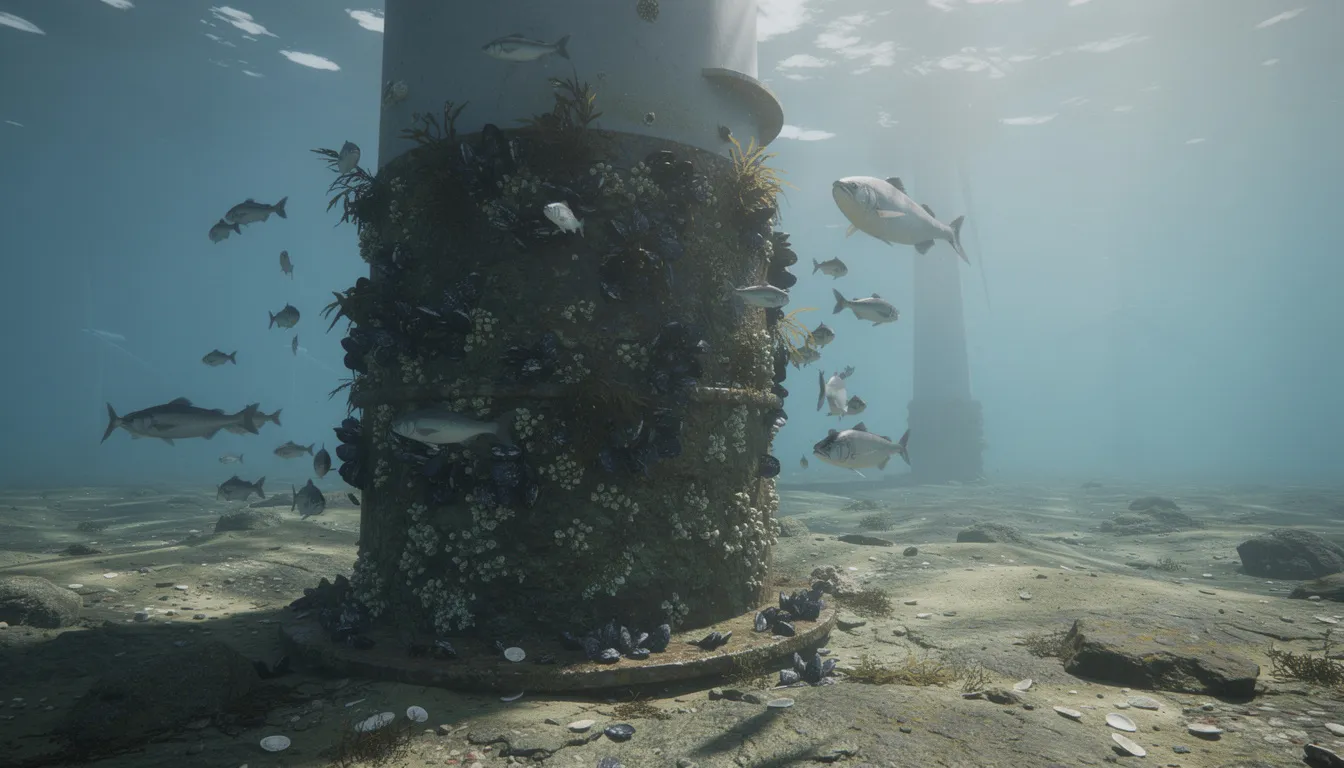
Offshore wind technology creates unexpected ecological effects. Turbine foundations in the North Sea have been shown to act as artificial reefs, providing hard substrate for mussels and other invertebrates. Some studies have found localized increases in species richness around foundations.
Visual and noise concerns are common in planning debates. At typical setback distances (often 500–1,000 meters from homes), measured sound levels are comparable to a quiet office or a household refrigerator. Regulations in most countries require environmental impact assessments and community consultation before construction.
How do wind farms affect communities, jobs, and agriculture?
Utility scale wind projects bring measurable economic benefits to local communities. Construction creates temporary jobs for civil works, electrical installation, and logistics. Once operational, wind farms require permanent technicians for maintenance, inspections, and repairs.
In the United States, the land-based wind industry supports hundreds of thousands of jobs and contributes billions of dollars in investment and local tax payments annually. These benefits extend across rural areas where other large-scale employment opportunities may be limited.
For farmers and ranchers, hosting turbines provides a new income stream without sacrificing most of their land. Landowners receive lease payments—often several thousand dollars per turbine per year—while continuing to plant crops or graze livestock between the structures. This dual use makes wind farms attractive for agricultural communities.
Community concerns typically focus on:
-
Visual impact: Turbines are tall and visible from long distances, changing familiar landscapes
-
Shadow flicker: Rotating blades can cast moving shadows on nearby properties at certain times of day
-
Noise: Low-frequency sound from blades and mechanical components, though usually below regulatory limits at setback distances
Planning rules address these issues through minimum setback distances, layout optimization, and operational restrictions during sensitive periods. Community benefit funds, local ownership stakes, and transparent engagement processes help build acceptance.
Some studies have found that wind farms alter local microclimates by enhancing turbulence and mixing in the atmospheric boundary layer. This can modestly change near-surface temperatures—sometimes warming nighttime air or reducing frost risk—which may benefit certain crops. However, these effects are localized and small compared to broader weather variability.
Challenges: grid integration, radar, and interference
Because wind is variable, grid operators must plan around forecasted output. When the wind blows strongly, wind farms can produce at or near full capacity. When wind speeds drop, output falls. Managing this variability requires flexible backup generation, energy storage, improved transmission, and accurate weather forecasting.
As wind farms supply a larger share of electricity in some regions, grid codes increasingly require them to support voltage and frequency stability—not just inject power. Modern turbines can provide reactive power, synthetic inertia, and ramp-rate control, making them active participants in grid management rather than passive generators.
Tall rotating blades can interfere with radar systems used for aviation and weather monitoring. The movement creates clutter on radar screens, potentially obscuring aircraft or weather patterns. This has delayed some wind projects until mitigation measures—software filters, upgraded radar, or adjusted turbine placement—could be implemented.
In some cases, wind farms have affected TV or radio reception in nearby areas. Modern planning typically uses signal modeling to identify potential interference zones and apply corrections, such as installing signal boosters or adjusting turbine layouts.
Despite these challenges, technical solutions have allowed countries like the UK, Denmark, and several U.S. states to integrate high shares of wind power reliably. Denmark regularly generates over 50% of its electricity from wind on windy days, demonstrating that grid integration challenges are solvable with proper planning and investment.
Life cycle of a wind farm: from construction to repowering
Building a wind farm involves several distinct phases. The process typically begins years before any turbine arrives on site.
Development and permitting: Developers conduct wind resource assessments, environmental surveys, and grid connection studies. They secure land leases, apply for permits, and conduct public consultations. This phase can take 3–7 years depending on project complexity and regulatory requirements.
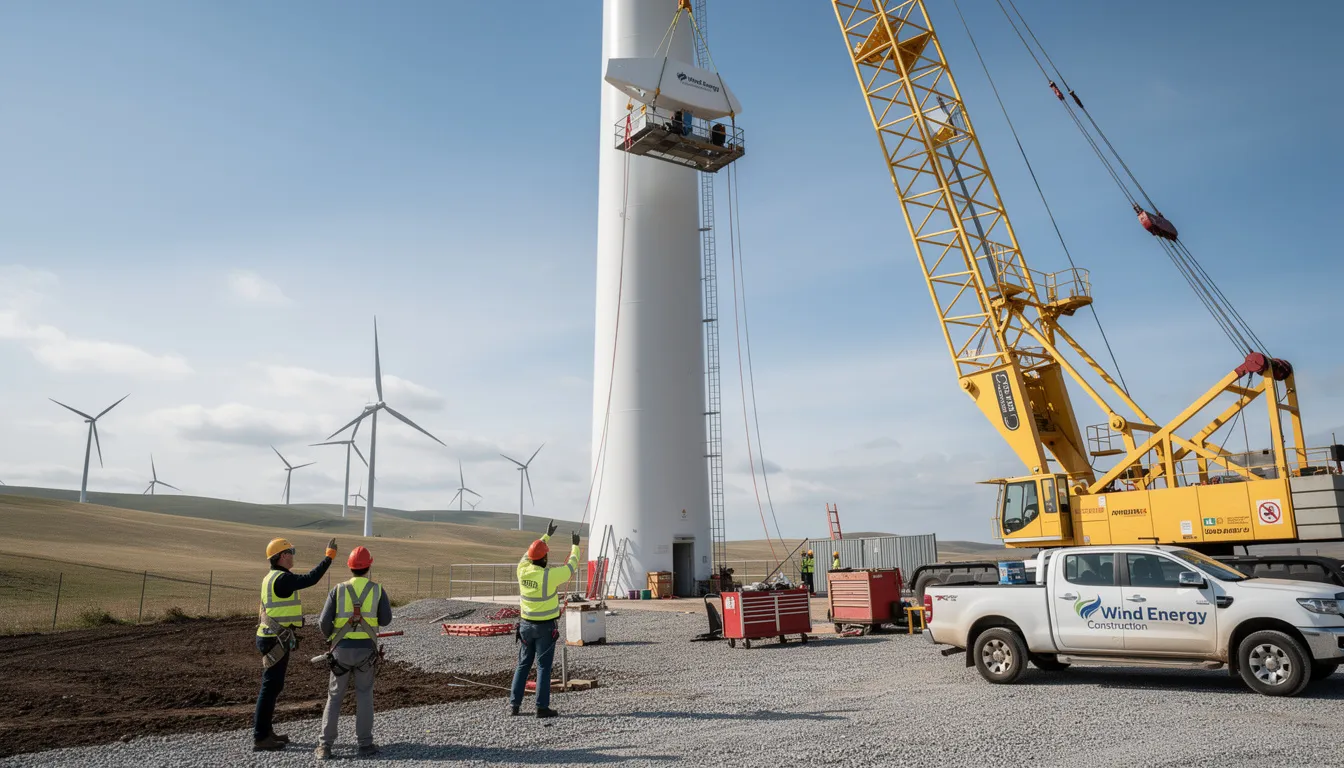
Construction: Once permitted, civil works begin with access roads and foundations. Onshore foundations are typically reinforced concrete; offshore foundations may be steel monopiles driven into the seabed, or jacket structures in deeper water. Tower sections, nacelles, and blades arrive by specialized transport. Cranes lift components into place, and technicians complete electrical connections. Construction typically takes 1–2 years for large projects.
Commissioning and operation: After installation, each turbine undergoes testing before commercial operation begins. Wind farms typically operate for 20–25 years, with ongoing inspections, component replacements, and software upgrades to maintain performance and safety.
End of life: When a wind farm reaches the end of its design life, owners face three main options:
|
Option |
Description |
|---|---|
|
Decommissioning |
Remove turbines and foundations, restore site to original condition |
|
Life extension |
Conduct detailed inspections and repairs to safely continue operation for additional years |
|
Repowering |
Replace older turbines with fewer, larger, more efficient modern turbines |
Recycling is increasingly important. Steel towers, copper wiring, and concrete foundations are largely recyclable. Wind turbine blades, made from composite materials like fiberglass and epoxy, have historically been more challenging—often landfilled or used as fuel in cement kilns. However, new recyclable blade designs are emerging, and the wind industry is investing in improved recycling infrastructure.
Future of wind farms and their role in the energy transition
Wind farms are central to national net-zero and clean energy plans through the 2030s and beyond. Many countries have set ambitious targets for wind capacity growth as part of their strategies to address climate change and improve energy security.
The next frontier is deep-water offshore wind. Floating platforms—semi-submersibles, spars, and tension-leg designs—are enabling development in waters too deep for traditional fixed foundations. This opens vast new areas with even stronger and more consistent wind flow, particularly off the coasts of the Pacific, Atlantic, and Mediterranean.
Combining wind with solar, battery storage, and smarter grids will help supply reliable, low-carbon power around the clock. Hybrid projects that pair wind farms with solar arrays and storage facilities are becoming more common, maximizing the use of grid connections and providing steadier output.
The renewable energy sector continues to innovate. Larger turbines with longer blades capture more energy per installation. Advanced materials reduce weight and improve efficiency. Digitalization—using sensors, AI, and predictive maintenance—is making wind farms safer and more productive.
At its core, what wind farms do is elegantly simple: they turn a naturally occurring resource—the wind—into large-scale, dependable electricity without burning fuel. As the world works to decarbonize power generation, wind farms will play an increasingly vital role in creating electricity that’s clean, affordable, and widely available.
Key takeaways:
-
Wind farms cluster many turbines together to generate power at scale, feeding electricity produced directly into the grid
-
Both onshore and offshore wind farms are expanding rapidly worldwide, with offshore wind technology enabling development in deeper waters
-
Environmental impacts are manageable with careful siting and mitigation, while climate benefits from displacing fossil fuels are substantial
-
Local communities gain jobs, tax revenue, and lease payments, though planning must address visual, noise, and land-use concerns
-
The future of wind farms includes larger turbines, floating platforms, and integration with storage and solar for reliable clean energy
Understanding what wind farms do—and how they fit into the broader energy system—helps you appreciate the infrastructure powering the transition to a cleaner, more sustainable electricity supply.