Wind energy has reshaped the American power landscape. If you want to see where wind farms are located across the U.S., understand which states lead in capacity, and learn why that matters for both clean energy goals and the communities living near these massive industrial sites, you’re in the right place. This comprehensive guide walks you through interactive mapping tools, the largest projects currently operating, and what all of this means for workers and residents in wind-heavy regions.
This article is written from the perspective of InjuredCases.com, which focuses on safety, accidents, and legal rights around wind farm and industrial sites in Texas and throughout the U.S.
Quick Overview: Wind Farms in the USA (Answer the Query Fast)
As of January 2026, the United States operates more than 75,000 utility-scale wind turbines across hundreds of wind farms, with a combined operational capacity exceeding 144,000 megawatts (MW). This clean energy infrastructure powers over 40 million American homes annually.
Most wind farms are concentrated in the Central and Midwest regions of the country. Texas dominates with roughly 40,000 MW of installed capacity—about 27 percent of the national total. Iowa, Oklahoma, Kansas, and Illinois follow as top producers. Development is also expanding into previously low-wind areas and offshore locations along the Atlantic coast.
Publicly available mapping tools make it easy to explore this infrastructure:
-
National wind turbine databases allow users to zoom in on individual projects
-
Federal wind resource maps show wind potential by region
-
Interactive viewers display turbine locations, project names, and capacity data
These resources help landowners, researchers, policymakers, and workers understand exactly where large-scale wind development is occurring—or is planned for the future.

Interactive Maps of Wind Farms in the USA
Several free, publicly accessible tools let you view and explore wind farms and turbines plotted across the United States. Understanding how to use these resources can help you research specific projects, track new developments, or simply see what’s happening in your region.
The US Wind Turbine Database (USWTDB) Viewer
Developed collaboratively by Lawrence Berkeley National Laboratory, the U.S. Geological Survey, and the American Clean Power Association, this database provides the most comprehensive view of wind infrastructure in the country:
-
View individual turbine points for both onshore and offshore installations nationwide
-
Filter by year of installation, turbine height, manufacturer, and project name
-
Download data in multiple formats for research or planning purposes
-
Access technical specifications including model, nameplate capacity, and commissioning date
The latest version (v8.2 as of December 2025) includes expanded offshore wind data reflecting recent federal leasing activity.
How Interactive Map Interfaces Work
When you click into a typical wind farms in USA map, you’ll encounter:
-
A zoomable basemap of the entire United States with colored points or polygons representing projects
-
Pop-up information panels that appear when you hover or click on a specific location
-
Project details including name, capacity (MW), county, state, and commercial operation date
Most platforms allow you to:
-
Focus on specific states like Texas, California, Oklahoma, or Iowa
-
Toggle between layers (onshore vs. offshore, existing vs. planned)
-
Export project lists for deeper analysis
Wind Resource Maps
For legal assistance and information about wind farm accidents, visit The Morgan Legal Group.
The Department of Energy’s WINDExchange program offers separate state-level wind resource maps showing how strong the wind potential is at a given location. These complement project-location maps by helping users understand why certain areas attract development while others don’t.
Why These Maps Matter – Understanding the relevance of these maps is crucial, especially for those concerned with industrial accidents, as they can provide insight into potential risks and legal responsibilities.
-
Landowners can identify nearby projects and understand potential lease opportunities or impacts
-
Communities can track what’s planned in their area before construction begins
-
Workers and contractors can locate job sites and understand regional development trends
-
Researchers can analyze patterns in wind deployment for academic or policy purposes
Largest Wind Farms in the USA (With Map Locations)
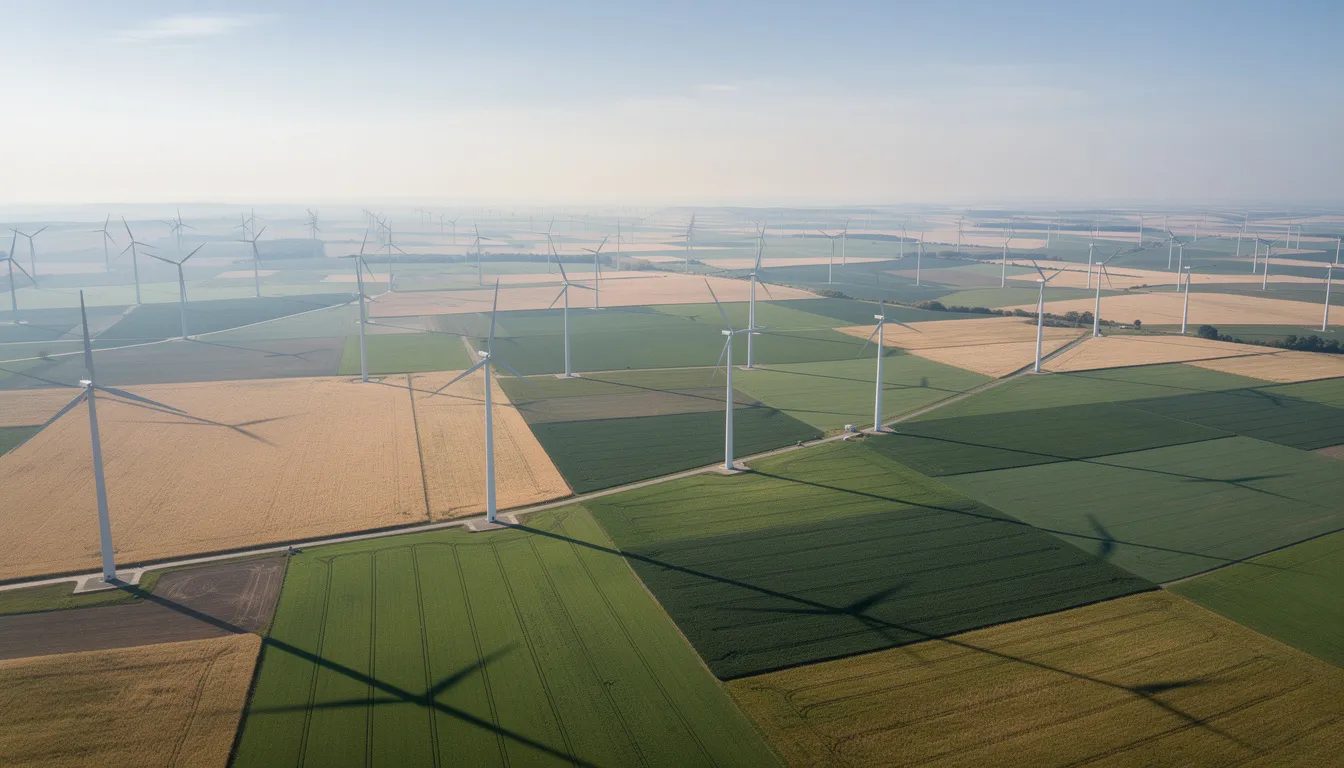
A handful of very large wind farms provide a significant share of U.S. wind capacity. These massive installations are easily visible on any national wind farm map as dense clusters of turbine points stretching across counties.
Here are some of the most important large-scale wind projects currently operating in the United States:
Traverse Wind Energy Center – Oklahoma
-
Capacity: Approximately 998 MW
-
Location: Blaine and Custer Counties, Oklahoma
-
Completed: 2022
-
This project spans over 300 square miles and appears on national maps as a concentrated cluster in west-central Oklahoma
Roscoe Wind Farm – Texas
-
Capacity: Over 780 MW
-
Location: Nolan County, Texas (Panhandle region)
-
Completed: 2009 (multiple phases)
-
One of the earliest mega-scale wind farms in the U.S., this project helped establish Texas as the national leader in wind power
Horse Hollow Wind Energy Center – Texas
-
Capacity: Approximately 735 MW
-
Location: Taylor and Nolan Counties, Texas
-
Completed: 2006–2007
-
Features more than 400 turbines spread across 47,000 acres
Alta Wind Energy Center – California
-
Capacity: Over 1,500 MW across multiple phases
-
Location: Kern County, California (Tehachapi Pass)
-
Completed: 2010–2014
-
The largest wind farm in California, located in a mountain pass with consistently high wind speeds
Shepherd’s Flat Wind Farm – Oregon
-
Capacity: Approximately 845 MW
-
Location: Gilliam and Morrow Counties, Oregon
-
Completed: 2012
-
Uses 338 turbines across a site spanning 30 miles
Capricorn Ridge Wind Farm – Texas
-
Capacity: Approximately 662 MW
-
Location: Sterling and Coke Counties, Texas
-
Completed: 2007–2008
-
Part of the broader West Texas wind development zone
Fowler Ridge Wind Farm – Indiana
-
Capacity: Over 600 MW
-
Location: Benton County, Indiana
-
Completed: 2009–2010
-
One of the largest wind farms east of the Mississippi River
Why Large Wind Farms Matter
From a grid perspective, these projects provide reliable, large-scale electricity generation that supports state and federal clean energy goals.
From a safety and legal perspective, these are massive industrial sites. Construction requires hundreds of heavy trucks hauling 200-foot blades, nacelles weighing 50+ tons, and tower sections transported on specialized trailers. Operations involve technicians climbing 300-foot towers and working with high-voltage electrical systems.
This creates potential for serious accidents and personal injury claims—something InjuredCases.com focuses on for workers and families affected by wind farm incidents.

Recently Built Wind Farms in the USA
The map of U.S. wind farms is constantly changing. New projects come online each year as developers capitalize on favorable policies, declining technology costs, and strong wind resources in expanding regions.
In 2025, approximately 50–60 new utility-scale wind farms began commercial operation across the country, adding tens of thousands of megawatts to the national total. The pipeline remains robust, with Cleanview documenting 802 planned projects expected to come online between 2025 and 2027.
Recently Completed Projects (2024–2025 Examples)
-
Amistad Wind Project – Val Verde County, Texas – Approximately 350 MW – Completed April 2025
-
Plum Creek Wind – Wayne County, Nebraska – Approximately 230 MW – Completed late 2024
-
Traverse Wind (additional phases) – Blaine County, Oklahoma – Added capacity in 2024–2025
-
Flat Top Wind – Mills County, Texas – Approximately 200 MW – Completed 2024
-
Rattlesnake Wind Project – Borden County, Texas – Approximately 300 MW – Completed 2025
-
High Plains Wind – Laramie County, Wyoming – Approximately 175 MW – Completed late 2024
These latest projects may not appear immediately on static maps, but they show up in frequently updated databases like the USWTDB Viewer within months of commercial operation.
Why Tracking New Projects Matters
-
Researchers and policymakers can monitor the pace of the clean energy transition
-
Nearby residents experience changes in traffic, noise, and visual landscape during and after construction
-
Workers gain access to new job opportunities—but also face new industrial safety hazards
-
The post-Inflation Reduction Act surge in development means more construction activity and, unfortunately, more potential for accidents
Wind Farm Distribution by State: Where the Turbines Are
Wind farms are not evenly distributed across the United States. Geographic wind resources, land availability, transmission access, and state policies all influence where projects are located.
Top Wind Power Producing States (as of January 2026)
|
State |
Estimated Capacity (MW) |
Share of State Electricity from Wind |
|---|---|---|
|
Texas |
~40,000 |
~25% |
|
Iowa |
~12,000+ |
~60% |
|
Oklahoma |
~10,000+ |
~40% |
|
Kansas |
~8,000+ |
~45% |
|
Illinois |
~7,000+ |
~12% |
|
Colorado |
~5,000+ |
~25% |
Texas generates far more total wind electricity than any other state, but Iowa, Kansas, and Oklahoma actually derive a higher percentage of their electricity from wind resources.
Regional Patterns
-
Central Plains and Midwest: The highest concentration of wind farms, driven by flat terrain, consistent annual average wind speeds, and available land
-
Mountain West: Wyoming, Colorado, and New Mexico host significant projects, often in mountain passes with strong wind resources
-
Pacific Northwest: Oregon and Washington have notable wind development
-
Southeast: Very few utility-scale wind farms exist in this region, though taller turbine technology is beginning to enable development
-
Offshore (Atlantic Coast): Under 100 MW commercially operational as of early 2026, but 30+ GW in advanced planning stages, with major investments in New York, Massachusetts, and Virginia
State-Level Resource Maps
EIA-based data and DOE wind resource maps allow you to check wind generation statistics for any state. These show:
-
Total wind electricity generation per state
-
Wind’s share of each state’s total electricity generation
-
Which regions have the highest quality wind resources
Safety and Legal Implications
States with dense wind development see significantly more:
-
Heavy truck traffic transporting turbine components
-
Construction activity in rural areas
-
Turbine maintenance and repair work at height
This increases the risk of industrial accidents, vehicle collisions on rural roads, and workplace injuries. If you’ve been hurt in a wind-related incident in Texas or elsewhere, understanding where these clusters exist can be important for your case.
How Wind Energy Works and Why Location Matters
Modern wind turbines convert kinetic energy from moving air into electricity through a straightforward mechanical process:
-
Wind turns large blades connected to a central hub
-
The hub rotates a shaft inside the nacelle (the housing at the top of the tower)
-
A generator converts that rotational energy into electricity
-
Transformers step up the voltage for transmission to the grid
Why Location Is Critical
Not every location is suitable for utility-scale wind development. The viability of a wind farm depends on several geographic factors:
-
Wind resource quality: Annual average wind speeds must be sufficient (typically Class 3 or higher at hub height) to generate electricity economically
-
Land availability: Wind farms require significant acreage, though turbines can coexist with agricultural uses
-
Transmission access: Proximity to existing power lines reduces interconnection costs
-
Terrain: Flat plains, ridgelines, and mountain passes tend to offer the most consistent wind speeds
This is why most U.S. onshore wind farms cluster in high-wind regions—the central Great Plains, mountain passes, and certain ridgelines.
Historic vs. Modern Wind Power
Historic windmills were used for pumping water or grinding grain. Today’s utility-scale turbines are industrial machines with:
-
Hub heights exceeding 100 meters (over 300 feet)
-
Rotor diameters over 120 meters
-
Individual turbine capacities of 2–5 MW onshore, up to 12–15 MW offshore
-
Capacity factors of 35–50% onshore, up to 60% offshore
Small wind turbines (under 100 kW) still exist for residential and agricultural use, but they represent a tiny fraction of total U.S. wind capacity.
What Wind Farms Look Like on a Map
When you explore wind farm locations using satellite or mapping tools, you’ll typically see:
-
Turbines arranged in long rows following ridgelines or property boundaries
-
Access roads connecting each turbine pad
-
Substation locations where power is collected and transmitted
-
Transmission corridors connecting the project to the grid
Location Impacts on Communities and Workers
Where a wind farm is located influences:
-
Noise and visual impacts on nearby residents
-
Wildlife considerations (particularly bird and bat migration routes)
-
Worker access for construction, operations, and emergency response
-
Accident risk based on terrain, weather, and remoteness

Wind Farms, Industrial Safety, and Legal Rights (InjuredCases.com Perspective)
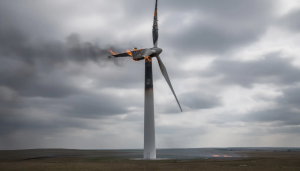
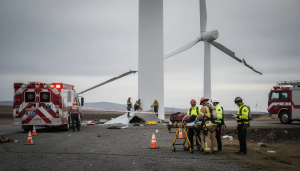
While wind farms are essential to America’s clean energy future, they are also large-scale industrial work sites where serious accidents occur. The construction, operation, and maintenance of wind projects involve significant hazards that can result in life-changing injuries or death.
Industrial Hazards at Wind Farm Sites
Wind farm work involves:
-
Heavy equipment including cranes capable of lifting 100+ ton nacelles
-
18-wheelers and specialized trailers hauling oversized blades and tower sections
-
High-elevation work inside towers (climbing 300+ feet) and on nacelles
-
Electrical systems, substations, and high-voltage transmission lines
-
Remote locations with limited emergency response access
Common Types of Wind Farm Accidents
Based on industry incident data and legal experience, wind farm accidents often involve:
-
Falls from height: Ladder failures, harness malfunctions, or slips inside towers
-
Crane accidents: Boom failures, dropped loads, or tip-overs during installation
-
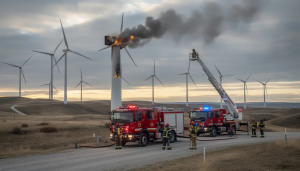
Electrical incidents: Arc flash, electric shock, or fires in substations and turbines
-
Struck-by injuries: Tools, components, or ice falling from nacelles and blades
-
Vehicle crashes: Collisions involving work trucks, oversized load transporters, or commuting workers on rural roads
-
Caught-between incidents: Workers pinned by equipment or rotating components
How Mapping Wind Farms Helps Legal Cases
Understanding wind farm locations can be important for legal claims:
-
Identifying clusters of wind development helps establish patterns of industrial activity
-
Mapping truck routes shows where component transportation creates traffic hazards
-
Documenting the exact location of an incident supports investigation and liability analysis
How The Morgan Legal Group Approaches Wind Farm Cases
The Morgan Legal Group, promoted through InjuredCases.com, brings unique qualifications to wind farm injury claims:
-
Real-world investigation experience: Founding attorney Clinton Morgan has over 15 years of hands-on experience investigating serious accidents in industrial, oil, gas, and wind-energy environments
-
Technical understanding: The firm analyzes site layouts, maintenance records, and contractor relationships to identify who is liable
-
Contingency-fee representation: Injured workers and families pay nothing unless compensation is recovered
-
Aggressive advocacy: From negotiating with insurance companies to preparing for trial, the firm fights for maximum compensation
Who May Have Legal Rights After a Wind Farm Accident
If you or a loved one has been injured in a wind-farm incident, you may have grounds for a personal injury or wrongful death claim. This includes:
-
Turbine technicians injured during maintenance or repair
-
Construction workers hurt during installation phases
-
Truck drivers hauling turbine components
-
Landowners or nearby motorists harmed by project-related traffic or hazards
-
Families pursuing wrongful death claims after fatal incidents
Take Action
If you or a loved one were injured in a wind-farm or industrial accident in Texas, don’t wait to learn about your legal options. Contact InjuredCases.com for a free, no-obligation review of your case. Consultations are free, and there’s no financial risk to get answers.
How InjuredCases.com Helps Law Firms Serving Wind-Farm Injury Victims
InjuredCases.com connects personal injury and workers’ compensation law firms with exclusive, high-intent leads involving serious accidents—including those from industrial and wind-energy sites across Texas and the broader U.S.
What InjuredCases.com Offers Law Firms
-
Qualified, filtered leads: Cases are screened by type (MVA, workplace injury, catastrophic injury, wrongful death) so firms can focus on what they handle
-
Real-time delivery: Leads are delivered via email or API integration, allowing firms to respond quickly
-
Exclusive model: Leads are not shared with competing firms
-
Replacement guarantees: When lead criteria are not met, replacements are provided
-
TCPA compliance: All contact methods comply with federal regulations
Why This Matters for Wind Farm Cases
As wind farms proliferate across the U.S. map—especially in Texas—the number of potential industrial and traffic-related claims grows. Law firms handling these complex cases need reliable, compliant marketing support to connect with injured clients when they need help most.
For law firms seeking to expand their caseload in industrial injury, wind energy accidents, or trucking-related claims, InjuredCases.com provides a proven source of exclusive, qualified leads with no long-term commitment required.
Key Takeaways
-
Interactive maps and databases like the USWTDB Viewer let you explore wind turbine locations, project data, and capacity information across the entire United States
-
Texas leads the nation with approximately 40,000 MW of wind capacity, followed by Iowa, Oklahoma, Kansas, and Illinois
-
The largest wind farms exceed 500–1,000 MW and appear as dense clusters on national maps
-
New projects continue to come online, with hundreds planned through 2027
-
Wind farms are industrial sites where serious accidents occur—falls, crane incidents, electrical shocks, and truck crashes
-
If you’ve been injured in a wind farm accident in Texas, The Morgan Legal Group offers free consultations and contingency-fee representation through InjuredCases.com
The wind energy industry is growing rapidly, and so is the need to understand both its benefits and its risks. Whether you’re a researcher, a landowner, a worker, or someone who has been injured, knowing where wind farms are located—and what happens at these sites—is important information.