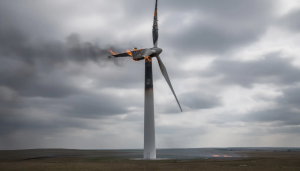
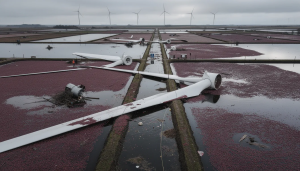
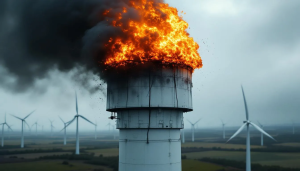
The morning residents of Plymouth, Massachusetts woke to an unexpected sight: twisted metal debris scattered across a field, charred remains of a wind turbine nacelle, and the aftermath of what appeared to be an explosion. This December incident joins a growing list of dramatic wind turbine failures that have raised serious questions about the safety of these towering structures in communities worldwide.
While wind farms generate clean electricity and account for an increasing share of global energy production, the reality is that wind turbines can and do explode. These catastrophic failures, though statistically rare, create debris fields extending hundreds of feet, produce ground-shaking vibrations, and pose significant risks to nearby residents. Understanding why these incidents happen, their frequency, and what’s being done to prevent them is crucial for communities living in the shadow of these massive structures.

What Causes Wind Turbines to Explode
When a wind turbine appears to explode, the underlying cause typically involves a combination of mechanical failure, fire, and structural collapse rather than a true chemical explosion. However, the visual effect – with blades fragmenting and flying debris – certainly looks explosive to witnesses and creates similar safety concerns.
Nacelle fires from electrical faults and overheating components leading to catastrophic failure represent one of the most common pathways to turbine destruction. The nacelle, located atop the tower, contains hundreds of liters of lubricating oil, electrical equipment, and polymer components that create a significant fire load. When electrical systems short circuit or components overheat, they can ignite these flammable materials, creating intense fires that quickly engulf the entire nacelle.
Hydraulic system failures causing pressure buildup and explosive release occur when seals fail or hoses degrade in the pitch and yaw systems. These hydraulic fluids, often mineral oil-based, can spray under high pressure onto hot components. When this pressurized fluid ignites, it creates a fireball effect that can appear explosive, especially when captured on video.
Lightning strikes igniting flammable materials and causing electrical explosions are particularly problematic because wind turbines, standing tall on exposed ridges, are frequent lightning targets. While modern turbines include lightning protection systems, imperfections in these systems can allow electrical current to arc through composite materials or control systems, creating ignition sources for nearby combustible materials.
Mechanical failures in gearbox and generator systems creating sparks and fires develop when bearings seize, shafts misalign, or lubrication systems fail. These mechanical issues generate excessive heat and friction that can ignite oil leaks, grease accumulations, or dust and fiber deposits within the nacelle.
Brake system malfunctions leading to overspeed conditions and structural failure create some of the most dramatic failure scenarios. When control systems fail and mechanical brakes cannot stop the rotor during high winds, centrifugal forces can tear blades apart, sending fragments flying at speeds exceeding 200 mph. The stored kinetic energy in a spinning rotor is enormous – when suddenly released through blade failure, the effect appears explosively violent.
Major Wind Turbine Explosion Incidents
Recent years have seen several high-profile wind turbine explosions that have captured public attention and raised community safety concerns. These incidents demonstrate the variety of failure modes and the significant visual and physical impact these events can create.
The recent blade detachment in Plymouth, Massachusetts with charred nacelle and debris field occurred in December, leaving residents shaken by the morning discovery of scattered turbine components. The incident investigation focused on determining whether mechanical failure preceded the fire or if electrical faults ignited flammable materials first.
In Scotland, the Galston, Ayrshire turbine losing all three blades during Storm Gerrit with sparks reported created one of the most dramatic video footage of turbine failure. Witnesses reported seeing sparks and flames before the blades detached and were hurled hundreds of feet from the tower base. The storm’s high winds likely contributed to overspeed conditions that exceeded the turbine’s design limits.
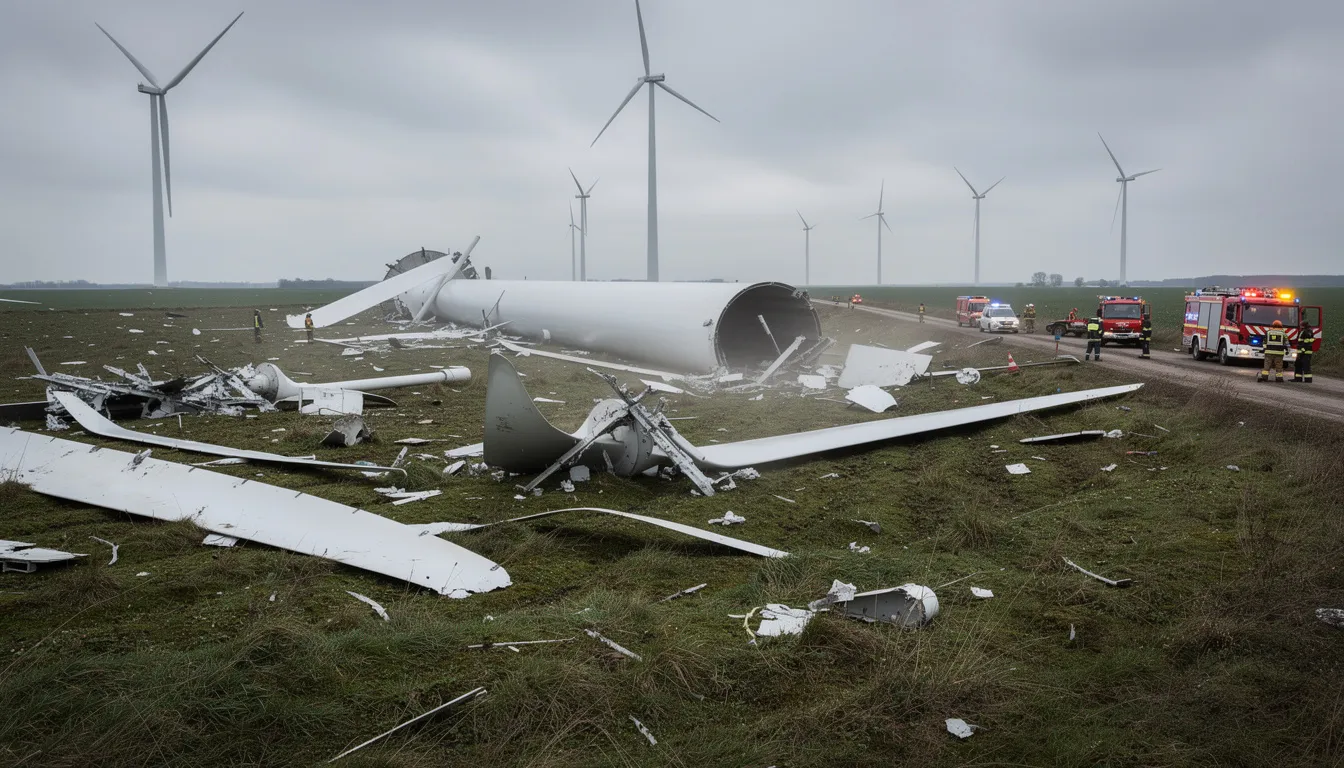
Perhaps most concerning was the 400-foot GE turbine collapse in Wisconsin causing ground shaking and debris scatter that affected nearby homes. Residents reported feeling vibrations through their foundations when the tower toppled, demonstrating how these massive structures can impact communities even when safety setbacks are supposedly adequate.
Multiple failures in Michigan, Colorado, Oklahoma, and Wyoming during extreme weather have highlighted the vulnerability of wind turbines to severe atmospheric conditions. These incidents often involve similar patterns: extreme winds overwhelming control systems, brake failures leading to overspeed conditions, and subsequent structural collapse or fire.
Internationally, the Eemmeerdijk Wind Farm collapse in Netherlands during high winds provided clear video documentation of how quickly a turbine can transition from normal operation to catastrophic failure. The footage showed the nacelle catching fire before blade detachment, illustrating the typical sequence of events in these incidents.
Explosion Statistics and Frequency
The frequency of wind turbine explosions provides important context for understanding the actual risk these incidents represent. Current data reveals several concerning trends about turbine safety and the reporting of incidents.
Fire accounts for 10-30% of catastrophic wind turbine accidents globally, making it one of the leading causes of total turbine loss. This percentage has remained relatively consistent as wind technology has evolved, suggesting that fire risk is an inherent challenge in wind turbine design rather than a problem that’s being effectively solved.
Industry reports show that 200 fire incidents were reported from 1995-2012, with 91% going unreported, indicating a significant gap between actual incidents and public awareness. This underreporting makes it difficult for communities to assess true risk levels and for researchers to identify patterns that could prevent future failures.
Statistical analysis suggests turbines catch fire at a rate of 1 in 1,710 to 1 in 2,000 annually, though this rate varies significantly based on turbine age, design, and operating conditions. Smaller turbines from earlier generations show different failure patterns than larger turbines currently being installed.
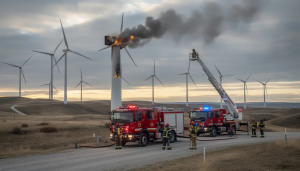
Most critically, 90% of nacelle fires result in total loss or major damage, meaning that once a fire starts in the confined space of a nacelle, it’s virtually impossible to extinguish. The height and inaccessibility of nacelles make firefighting efforts ineffective, so fires typically burn until all combustible materials are consumed.
Safety Risks for Nearby Communities
When wind turbines explode or catch fire, the safety implications extend far beyond the immediate turbine site, creating risks that can affect communities located significant distances away.
Debris fields extending hundreds of feet from explosion sites have been documented in multiple incidents, with blade fragments and nacelle components scattered well beyond typical safety perimeters. These debris patterns often extend further than originally anticipated by safety engineers, particularly when high winds or elevated terrain influence the trajectory of failing components.
The most dangerous aspect involves flying blade fragments reaching speeds over 200 mph during failure. When blades fail under centrifugal load, the stored rotational energy accelerates fragments to tremendous velocities. Modern wind turbine blades, some exceeding 200 feet in length, contain substantial mass that becomes extremely hazardous when thrown at these speeds.
Ground vibrations from turbine collapse affecting nearby homes have surprised residents in several documented cases. The impact of a 400-foot tower and nacelle hitting the ground creates seismic effects that can be felt through building foundations, potentially causing structural damage to nearby homes or at minimum, creating significant alarm among residents.
Fire spread risk to surrounding vegetation and property represents an often-overlooked consequence of turbine fires. Burning debris ejected from nacelles has started secondary wildfires in dry conditions, multiplying the environmental and property damage far beyond the original turbine site.
Toxic smoke release from burning composite materials and lubricants creates air quality concerns for downwind communities. The combustion of blade composites, transformer oils, and polymer components can produce harmful emissions that may affect residents with respiratory conditions or chemical sensitivities.
Recommended Safety Distances
Current safety setback requirements are increasingly viewed as inadequate for modern larger turbines, leading to calls for expanded safety zones around wind installations.
Campaigners demanding minimum two-mile distance from homes base their recommendations on documented debris scatter patterns and the increased size and power of modern turbines. This represents a significant increase from typical setbacks of 1,000 to 2,000 feet currently required in many jurisdictions.
Current setback requirements often inadequate for large modern turbines because they were developed based on smaller turbines with different failure characteristics. As turbines have grown taller and more powerful, the potential impact zone from catastrophic failure has expanded accordingly.
Analysis shows debris scatter patterns extending beyond typical safety zones, particularly for newer, larger turbines with longer blades and higher tower heights. Computer modeling of blade failure scenarios suggests that current setbacks may need to double or triple to adequately protect nearby properties.
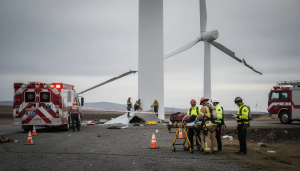
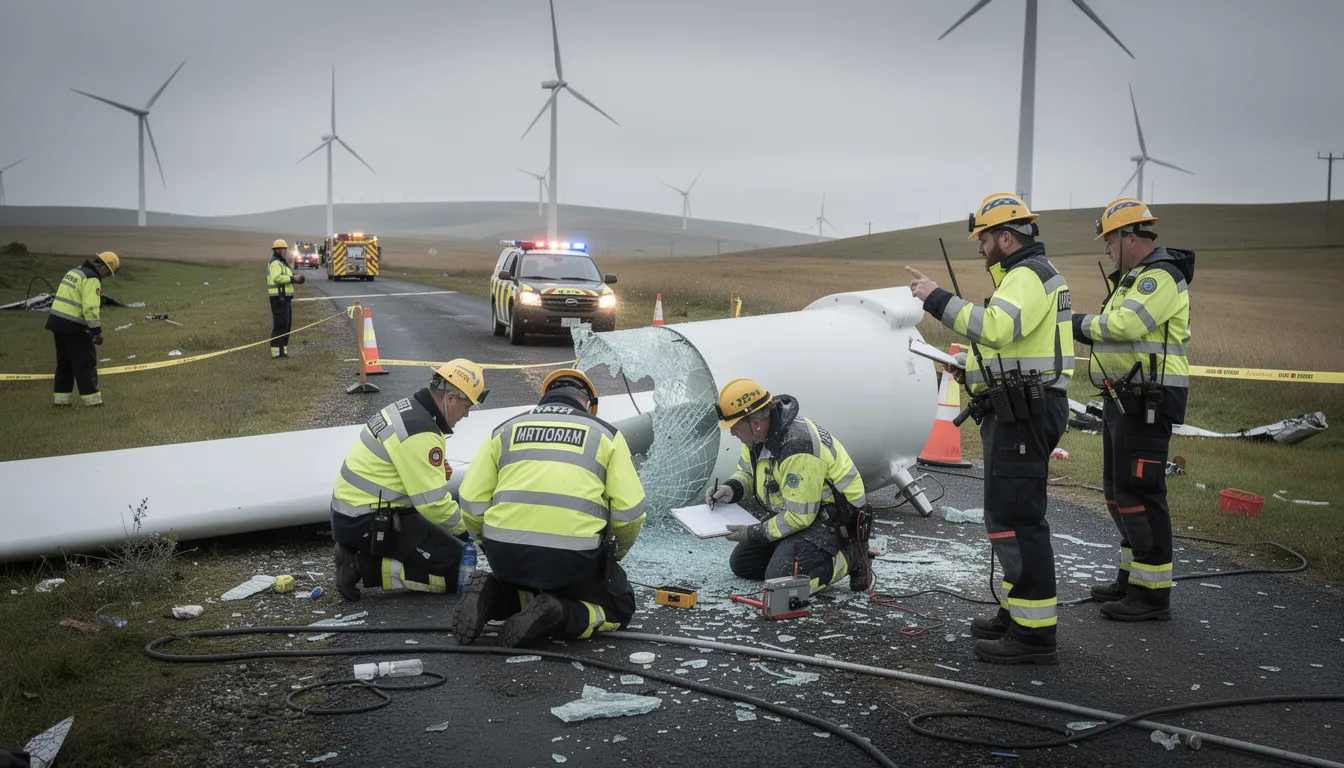
Emergency response challenges in remote wind farm locations compound safety risks, as fire departments and emergency medical services may be located significant distances from wind installations. This remoteness, while reducing immediate public exposure, can delay response to incidents and complicate evacuation procedures if needed.
Industry Response and Prevention Measures
The wind industry has implemented various technologies and procedures aimed at preventing explosive failures, though the effectiveness of these measures continues to be tested by real-world incidents.
Firetrace fire suppression systems for automatic detection and response represent one of the most promising developments in turbine fire prevention. These systems use heat-sensitive tubing that automatically releases suppression agents when temperatures rise, potentially containing fires before they spread throughout the nacelle.
Enhanced monitoring systems for early fault detection employ sensors throughout turbine components to identify temperature anomalies, vibration patterns, and electrical irregularities that might precede catastrophic failure. Advanced analytics can potentially predict failures days or weeks before they occur, allowing for preventive maintenance.
Improved lightning protection and grounding systems have been redesigned based on lessons learned from lightning-related failures. Modern turbines incorporate lightning receptors embedded in blade tips with improved conductive pathways to channel electrical energy safely to ground.
Regular maintenance protocols for hydraulic and electrical systems have been standardized across the industry to address the most common failure modes. These protocols focus on seal inspection, fluid quality monitoring, and electrical connection integrity to prevent the leaks and faults that often trigger fires.
Emergency shutdown procedures for extreme weather conditions have been refined to address the control system failures that can lead to overspeed incidents. Modern turbines are supposed to automatically feather their blades and activate braking systems when wind speeds exceed design parameters.
Economic Impact of Wind Turbine Explosions
The financial consequences of turbine explosions affect not only turbine operators but ultimately electricity consumers and the broader wind industry’s economic viability.
Each turbine valued over $1 million with daily revenue of $1,500-$2,000 means that catastrophic failures represent substantial financial losses. The complete destruction of a modern turbine, including tower, nacelle, and blades, can exceed $3-4 million in replacement costs, not including lost revenue during downtime.
Offshore turbines costing up to three times more increasing financial risk makes explosion prevention even more critical for offshore wind farms. The higher costs reflect both the more expensive marine-rated equipment and the significant installation challenges in offshore environments.
Rising warranty costs for manufacturers like GE, Vestas, and Siemens indicate that explosion-related failures are affecting the financial performance of major turbine manufacturers. Warranty claims for catastrophic failures can significantly impact manufacturer profitability and influence turbine pricing.
Increased insurance premiums affecting electricity generation costs reflect the insurance industry’s assessment of turbine explosion risks. These higher premiums are ultimately passed through to electricity consumers, making wind power less cost-competitive with other energy sources.
Extended downtime during investigation and debris removal often takes weeks or months, during which the wind farm operates at reduced capacity. Investigation requirements, environmental cleanup, and the time needed to manufacture and install replacement components create substantial revenue losses.
Quality Control Issues and Manufacturing Challenges
The rapid scaling of wind turbine technology and production has created quality control challenges that may contribute to the frequency of explosive failures.
Rapid development of larger turbines straining manufacturing capabilities has led to situations where turbine technology advances faster than manufacturing processes and quality control systems can adapt. The engineering challenges of scaling turbine components to unprecedented sizes create new failure modes that weren’t anticipated in smaller designs.
Supply chain pressures leading to quality control compromises affect component quality as manufacturers struggle to meet demand for turbine installations. The global push for renewable energy has created delivery pressures that may incentivize rushing components to market before thorough testing is complete.
Siemens Energy lowering 2023 earnings due to turbine repair costs demonstrates how quality issues are affecting major manufacturers financially. The company reported significant costs related to fixing onshore turbine components, suggesting systematic quality control problems rather than isolated incidents.
Increased failure rates in newer, larger turbine models appear to contradict the expectation that newer technology should be more reliable. Instead, the data suggests that larger turbines may be more prone to certain types of catastrophic failure than the smaller turbines they’re replacing.
Technology advancement outpacing safety testing and validation creates situations where turbines are installed in wind farms before long-term reliability data is available. The 20-25 year expected life of wind turbines means that comprehensive testing would require decades, forcing the industry to rely on accelerated testing and computer modeling that may not capture all potential failure modes.
The reality is that as turbines continue to grow larger and more complex, the consequences of failure become more severe. A blade detachment from a 50-meter blade creates different risks than one from a 100-meter blade, yet safety regulations and community planning haven’t always kept pace with this technological evolution.
While wind turbines explode less frequently than critics might suggest, these incidents are not theoretical risks – they’re documented realities with serious consequences for nearby communities. The combination of mechanical complexity, extreme operating conditions, and the enormous scale of modern turbines creates inherent explosion risks that the wind industry continues to address through improved technology and procedures.
For communities considering or living near wind installations, understanding these risks is essential for making informed decisions about setback distances, emergency planning, and advocacy for stronger safety measures. The industry’s response to recent high-profile failures suggests that preventing wind turbine explosions remains a significant challenge requiring ongoing attention and investment in safety technology.
As the world transitions toward renewable energy, ensuring that wind power development doesn’t compromise community safety remains a critical balance that will determine the long-term acceptance and success of wind technology.