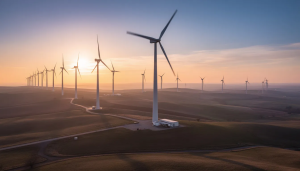
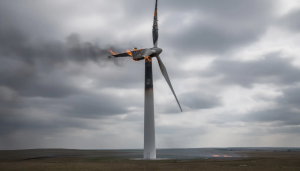
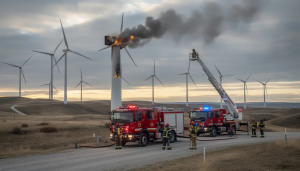
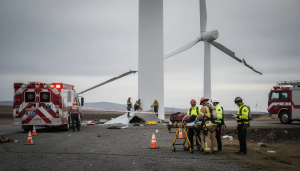
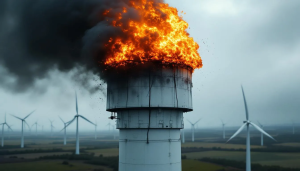
On October 29, 2013, a routine maintenance day at a wind farm in the Netherlands turned into one of the most devastating incidents in the history of the wind industry. A fire broke out in the nacelle of a Vestas turbine at the Piet de Wit wind farm near Ooltgensplaat, trapping two young technicians high above the ground. The world would soon learn their names—Daan Kous and Arjan Kortus—through a heart wrenching incident captured in a single photograph that continues to circulate online more than a decade later.
This article examines what happened that day, who these two men were, and what their tragedy has meant for turbine safety worldwide.
Answering the query: what happened to the “2 guys” in the wind turbine fire?
The viral image that surfaces whenever someone searches “wind turbine fire 2 guys” comes from this specific incident. On that October day in 2013, a sudden fire engulfed the engine room of a Vestas V66 wind turbine—a 1.75 MW machine with a hub height of approximately 67 meters—at the Piet de Wit wind farm in the province of South Holland.
Two young mechanics, Daan Kous (19) and Arjan Kortus (21), were conducting routine maintenance inside the nacelle when the fire started. Trapped with no safe route down the internal ladder, they climbed outside onto the narrow platform atop the burning turbine. A photograph taken from the ground shows them in a final embrace, one comforting the other amid rising smoke and flames.
The fire is believed to have been caused by an electrical short circuit within the nacelle’s control systems. Neither man survived. Arjan ultimately jumped from the turbine and died from the fall, while Daan remained on the nacelle and was killed by the fire. Their deaths marked a turning point in how the wind industry, regulators, and the public understood the risks faced by turbine technicians.
Timeline of the Piet de Wit wind turbine fire
The events of October 29, 2013, unfolded over several hours, beginning with what should have been an ordinary workday.
Before the fire: Four technicians arrived at the de Wit wind farm that morning to perform scheduled maintenance on the Vestas V66 turbine. The work involved inspecting and servicing components inside the nacelle—the enclosed housing at the top of the tower that contains the gearbox, generator, and electrical systems. All four workers climbed the internal ladder and entered the nacelle to begin their tasks.
When the fire broke: Sometime in the early afternoon, a fire started inside the nacelle. The exact moment of ignition is not precisely documented in public records, but witnesses on the ground reported seeing smoke billowing from the turbine. The fire spread rapidly, cutting off the internal ladder and trapping Daan and Arjan above the flames. The two more experienced technicians managed to descend before the escape route became impassable.
Emergency response and aftermath: The fire department initially responded with local units from Ooltgensplaat and surrounding municipalities, but they quickly discovered the limits of conventional firefighting equipment. Standard fire ladders could not reach a nacelle nearly 70 meters above the ground. A specialized team was called in, and a large crane was eventually deployed to attempt a rescue. By the time the crane reached working height, conditions on the burning turbine were too extreme. Firefighters had trouble extinguishing the blaze from the ground and ultimately had to allow the nacelle and rotor blades to burn out before they could safely approach. The recovery of both victims took several hours, extending into the evening.
The two technicians: names, ages, and final moments
Behind the viral photo are two young men who were just starting their careers. Daan Kous was 19 years old. Arjan Kortus was 21. Both were Dutch mechanics from the Zeeland and South Holland region, working as part of a maintenance crew servicing turbines at the Piet de Wit wind farm.
They were not strangers to the work. Turbine maintenance is a specialized trade that requires climbing dozens of meters, working in confined mechanical spaces, and handling high-voltage electrical systems. On October 29, they were part of a four-person team performing what was described as routine service on the Vestas V66.
When the fire cut off the internal ladder, Daan and Arjan found themselves separated from their two colleagues who had already made it down. With no safe path of escape and flames spreading through the nacelle below them, they climbed outside onto the small platform at the very top of the turbine. It was there, approximately 67 to 80 meters above the ground, that a local resident photographed them from below.
The image shows two workers standing together, one with his arm around the other in what appears to be a hug—a moment of human connection in impossible circumstances. Reports indicate that Arjan eventually made the decision to jump rather than burn. Daan stayed on the nacelle and was found inside the structure after the fire was controlled. Both died that day.
Their story is not just about a technical failure. It is about two engineers who went to work that morning and never came home.
Technical cause of the fire and turbine details
Investigations into the Piet de Wit incident pointed to an electrical fault—specifically, a short circuit—as the most likely cause of the fire. This type of ignition is one of the most common triggers for wind turbine fires globally, alongside lightning strikes and mechanical failures.
The Vestas V66 is a turbine model first introduced in the late 1990s. With a rated capacity of 1.75 MW, a hub height of around 67 meters, and a rotor diameter of 66 meters, it was a workhorse of the early utility-scale wind era. The de Wit wind farm had installed these turbines in the early 2000s.
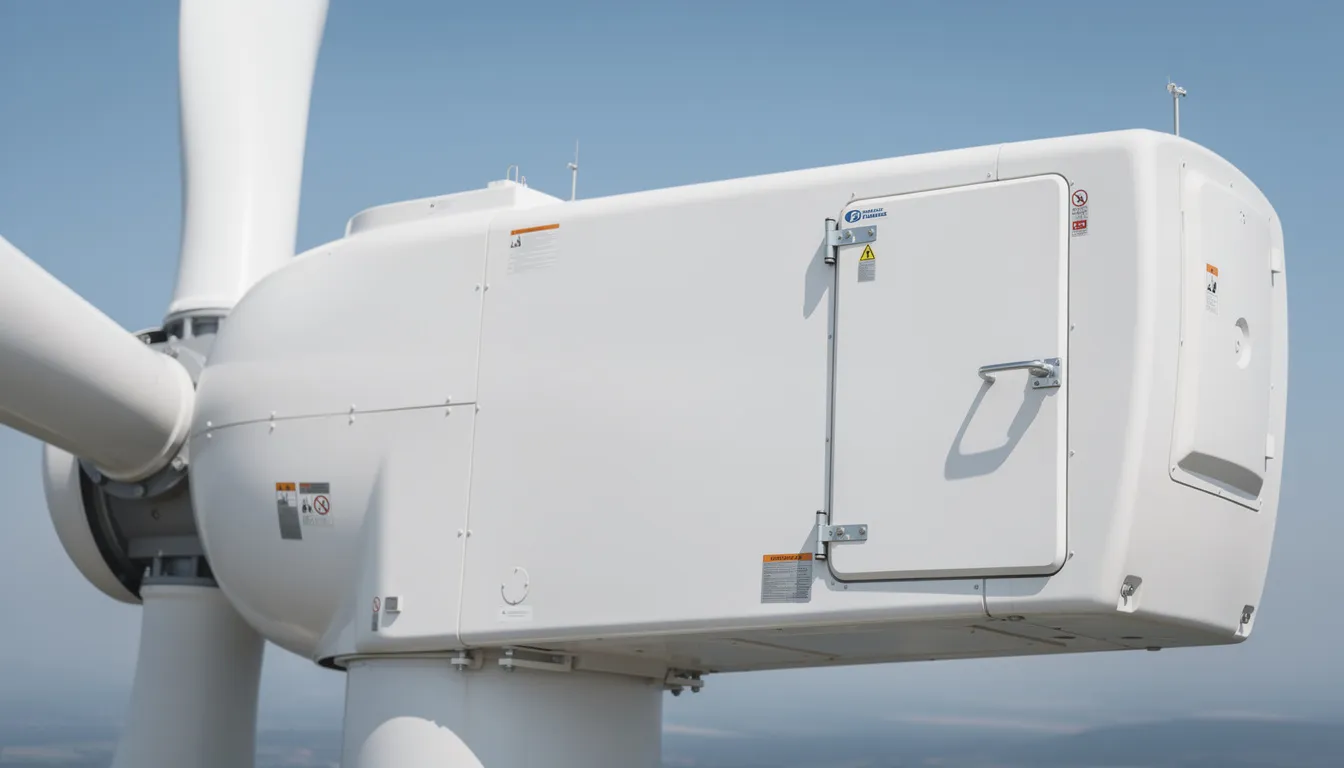
Inside every nacelle sits a complex array of machinery:
|
Component |
Function |
Fire Risk |
|---|---|---|
|
Gearbox |
Converts slow rotor rotation to fast generator speed |
Contains lubricating oil; friction can overheat |
|
Generator |
Produces electricity from mechanical rotation |
High-voltage components can arc |
|
Transformer |
Steps up voltage for grid connection |
Electrical faults can spark fires |
|
Control cabinets |
House electronics and SCADA systems |
Wiring failures and short circuits |
|
Hydraulic systems |
Control blade pitch |
Pressurized oil can atomize and ignite |
These components operate under significant thermal and electrical stress. When something fails—a cable overheats, insulation breaks down, or a connection comes loose—the result can be rapid ignition. Nacelles also contain flammable materials: hydraulic fluids, lubricants, polymer insulation, fiberglass composites, and cable coatings. Once a fire takes hold, it can grow quickly in the confined space.
The 2013 Netherlands tragedy was widely described at the time as the first documented case of human deaths directly caused by a wind turbine fire—a grim distinction that focused industry attention on an underappreciated risk.
Emergency response and challenges in fighting tall-turbine fires
When the first emergency call went out on October 29, firefighters from the Ooltgensplaat area and neighboring towns responded immediately. What they found was a fire unlike anything their standard equipment could handle.
The height problem: A wind turbine nacelle at 67 to 80 meters is far beyond the reach of conventional fire ladders, which typically extend to 30 meters at most. Water streams from ground-level hoses lose pressure and accuracy at such heights, especially in the windy conditions that wind farms are designed to exploit. The fire department initially had no direct means to fight the nacelle fire or rescue the trapped workers.
The crane attempt: A specialized height-rescue team was summoned, along with a large mobile crane capable of reaching the turbine’s top. However, deploying and positioning a crane of this size takes time—time that Daan and Arjan did not have. By the time the crane was operational, the fire had spread throughout the nacelle, and conditions made any rescue attempt impossible.
Controlled burn: With no way to safely approach the fire from above and limited effectiveness from below, emergency responders had to make the difficult decision to let the nacelle and part of the rotor blades burn out. Only after the fire exhausted its fuel could crews begin recovery operations. The bodies of both victims were recovered hours later, into the evening.
The incident prompted internal reviews within Dutch emergency services. Fire departments across Europe had to confront an uncomfortable truth: the growth of wind energy had outpaced the development of specialized firefighting protocols for these structures. Turbines were being installed in locations where no helicopter could easily land, no crane could quickly arrive, and no ladder could reach.
Wider context: other wind turbine fires and safety concerns
The Piet de Wit disaster was not an isolated event. It drew attention to a pattern of turbine fires that had been occurring worldwide, often with little public awareness.
Before and after 2013, Vestas turbines and those from other manufacturers have caught fire in Germany, Spain, Ireland, and Canada. While most of these incidents did not result in human deaths, they frequently caused complete turbine loss. A burning turbine typically cannot be saved—approximately 90% of turbine fires result in either total destruction or extended downtime.
Statistical analyses suggest that fire accounts for roughly 14% of all reported wind turbine accidents, making it the second most common incident type after blade failure. However, experts estimate that the actual number of fires may be significantly higher. Studies indicate that as many as 90% of turbine fire incidents go unreported, either because they occur in remote locations, are resolved without regulatory notification, or operators prefer to avoid publicity.
The sale of older turbine models into secondary markets has raised additional concerns. Machines like the V66 were designed in an era with different safety standards. When these turbines are resold and installed in new locations—sometimes in fire-prone regions like parts of California or Australia—questions arise about whether adequate safety upgrades have been performed. The Tule Wind project and similar installations in remote or arid areas face particular challenges: access for specialized firefighting equipment is limited, and response times can be measured in hours rather than minutes.
Impact on regulations, safety protocols, and industry practices
The deaths at Piet de Wit intensified scrutiny of how the wind industry protects its workers.
Emergency evacuation options: Unions and safety advocates called for better escape routes from nacelles. Standard internal ladders, which can be 60 to 100 meters long, become useless if a fire starts in the tower or nacelle. Proposed solutions included external ladders, rope-based descender devices, and even rescue capsules that could lower workers to the ground. Some operators began retrofitting turbines with descent systems, though adoption remained uneven.
Maintenance protocols: Manufacturers and wind farm operators reviewed their procedures for electrical work inside nacelles. “Hot work” practices—any maintenance involving heat, sparks, or open flames—came under particular scrutiny. Lockout/tagout procedures for isolating electrical systems were reinforced. Some companies introduced stricter controls on the types of materials and fluids permitted inside nacelles.
Training and specialized rescue: In the years following 2013, specialized high-angle rescue teams trained specifically for wind turbines became more common. These units, particularly important for the growing offshore wind sector, practice scenarios involving nacelle fires, injured technicians, and turbine evacuation. The Netherlands and other European countries invested in equipment and protocols tailored to the unique challenges of tall-turbine emergencies.
Regulatory attention: While no single sweeping regulation emerged, workplace safety guidelines in the Netherlands and across the EU received updates addressing work at heights and in confined mechanical spaces. The incident contributed to ongoing discussions at the International Electrotechnical Commission (IEC) about fire protection standards for wind turbines—discussions that continue today.

The viral image: symbolism, media coverage, and public reaction
The photograph taken on October 29, 2013, has become one of the most widely shared images in the history of the wind energy industry. It shows two figures standing on the narrow platform of a burning wind turbine, one with his arm around the other, silhouetted against smoke rising from below.
How the image spread: The photo was taken by a local resident from ground level and first appeared in Dutch media outlets like Netherlands Times and regional news sites. Within days, it had spread across international platforms. Over the following years, it resurfaced repeatedly on Reddit, Facebook, and various forums, often accompanied by comments from users who did not know the full story behind it.
Public reactions varied widely. Many saw the image as a powerful symbol of human connection in the face of death—two colleagues comforting each other in their final moments. Others viewed it as a stark reminder of the human cost behind energy infrastructure, challenging the perception of wind power as a purely “clean” and low-risk technology. Some criticized the repeated sharing of such an intimate moment, arguing that the photograph should be treated with the same respect as images from other tragic events.
Comparisons were drawn to photographs from the September 11 attacks, particularly images of people who faced impossible choices. The parallel was uncomfortable but apt: both situations involved individuals trapped at height by fire, with no viable escape.
For the families of Daan and Arjan, the continued circulation of this image represents a private tragedy made permanently public. When sharing or discussing the photograph, it is worth remembering that it depicts real people—not abstractions—and that their families continue to carry the weight of that loss.
Lessons learned and ongoing questions about wind turbine safety
More than a decade after the Piet de Wit tragedy, the wind industry has made progress on safety—but significant questions remain.
Key lessons from 2013:
-
Detection speed matters. Early detection of nacelle fires can mean the difference between evacuation and entrapment. Modern turbines increasingly incorporate smoke detectors, heat sensors, and integrated alarm systems that trigger automatic shutdowns.
-
Redundant escape routes are essential. Relying solely on an internal ladder creates a single point of failure. External descent systems, even if rarely used, provide a backup when the primary route is compromised.
-
Rescue planning must be realistic. Fire departments need equipment, training, and protocols specific to turbine heights. Assuming that a crane or helicopter will arrive in time is not a viable safety plan.
Unresolved issues:
-
Retrofitting older turbines: Who bears responsibility for upgrading machines like the V66 that were designed before current safety standards? Operators, manufacturers, and insurers continue to debate costs and liabilities.
-
Incident reporting transparency: The wind industry’s track record on reporting fires and accidents remains inconsistent. Without accurate data, it is difficult to quantify risks or justify investments in protection systems.
-
Balancing cost and safety: Fire suppression systems, automatic detection networks, and non-combustible materials add to turbine costs. In a competitive industry, these investments are not always prioritized.
Emerging technologies offer hope. Automatic fire suppression systems using clean agents or water mist can extinguish nacelle fires before they spread. Improved condition monitoring can detect overheating components before ignition occurs. Non-combustible hydraulic fluids and insulation materials can reduce the fuel available if a fire does start.
The expansion of wind energy is essential to addressing climate change. The world will need hundreds of thousands more turbines in the coming decades. Ensuring that the technicians who maintain them can work safely—and escape if something goes wrong—is not optional.
When the photograph of two workers embracing on a burning turbine reappears online, it is worth pausing to remember their names: Daan Kous and Arjan Kortus. Their story is a sad reminder that infrastructure is maintained by people, and those people deserve protection. The changes inspired by their deaths—better training, improved escape systems, heightened awareness—represent a legacy that extends far beyond one wind farm in the Netherlands.
If you encounter the viral image, consider sharing the context along with it. These were not anonymous figures in a dramatic photograph. They were two young men who went to work on an October morning and found themselves trapped in circumstances no one should face.
Their tragedy created pressure for change. The question now is whether the industry will continue that momentum—or wait for the next incident to remind us what is at stake.