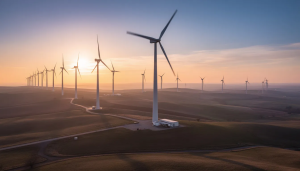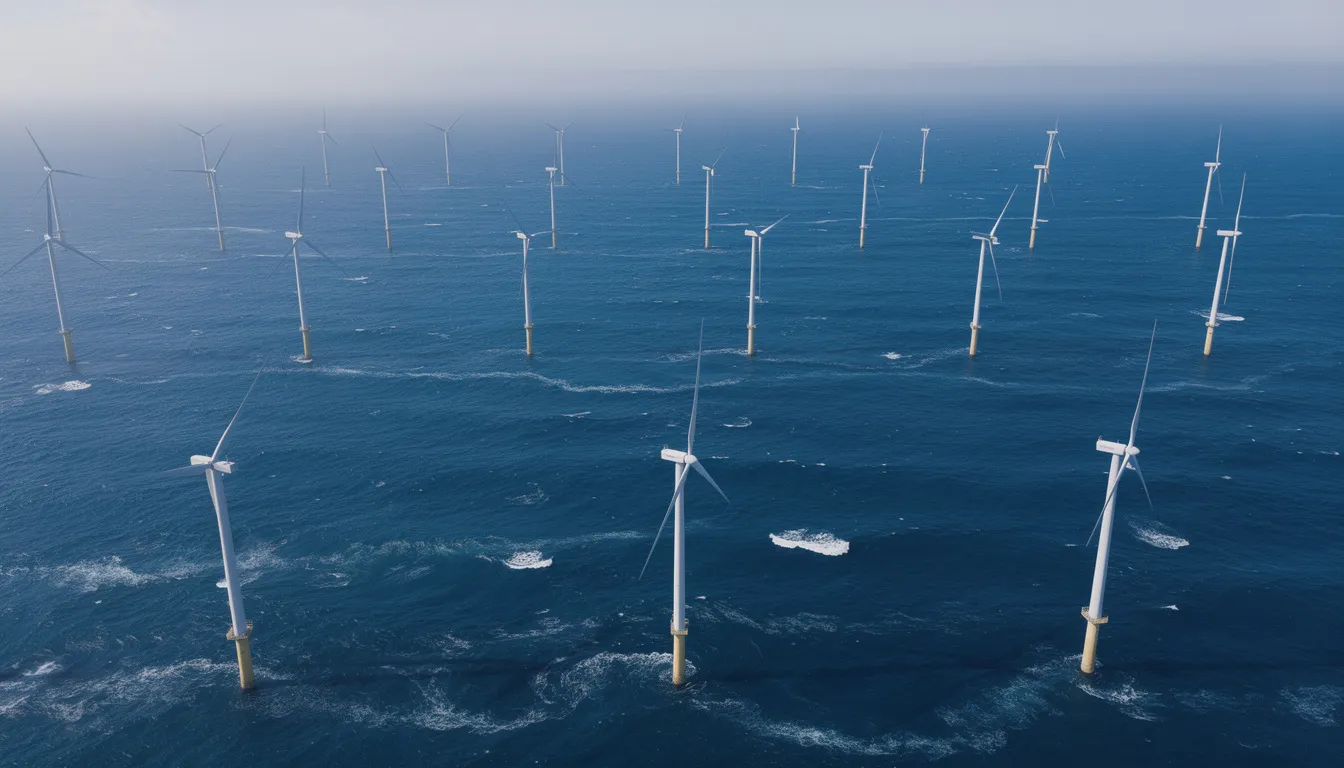
A wind farm is a power plant made up of multiple wind turbines grouped together to generate electricity for the grid. Unlike conventional power plants that burn fossil fuels, wind farms harness kinetic energy from moving air, converting it into electrical energy without releasing greenhouse gases or air pollutants during operation.
Wind farms can be built onshore across open plains, mountain ridges, and coastal areas, or offshore in seas and large lakes where consistent winds blow stronger and more reliably. These installations range dramatically in scale—from small community projects with just a handful of turbines producing a few megawatts to massive utility scale wind complexes featuring hundreds of individual wind turbines with generating capacity exceeding 1,000 MW.
Consider some concrete examples that illustrate this range. The Alta Wind Energy Center in California’s Tehachapi Pass stands as one of the largest onshore wind farm installations in the United States, generating approximately 1,548 MW across multiple phases. Across the Atlantic, Hornsea 1 in the UK North Sea represents the scale of modern offshore wind farms, producing 1,200 MW from 174 turbines—enough electricity to power over one million homes. China leads global wind energy development with projects like the Gansu Wind Farm spanning nearly 8,000 turbines across 20,000 hectares. Other major wind power producers include the United States, India, Brazil, and Germany.
Why do wind farms matter now? The answer lies in the urgent global push toward net-zero carbon emissions and climate change mitigation. Global wind capacity has exploded from roughly 10 GW in 1990 to over 900 GW onshore and 35 GW offshore by 2023. Wind energy now supplies approximately 7.8% of global electricity, and that share continues climbing as countries recognize wind as a critical renewable resource for decarbonizing their power systems.
Key facts to remember:
-
A wind farm is essentially a distributed power plant where multiple wind turbines feed into shared electrical infrastructure
-
Wind farms can be onshore or offshore, ranging from a few MW to several thousand MW
-
Major examples include Alta Wind Energy Center (USA, ~1,548 MW) and Hornsea 1 (UK, 1,200 MW offshore)
-
Global installed wind capacity has grown from 10 GW in 1990 to over 935 GW by 2023
How Does a Wind Farm Work?
Think of a wind farm as a distributed power plant where dozens or hundreds of turbines work together, each capturing wind energy and feeding their collective output into shared electrical infrastructure. Unlike a single large generating station, this distributed approach means the farm keeps producing power even when some turbines are offline for maintenance or experiencing calm conditions.
The conversion from wind to grid power follows a clear sequence. When wind blows across the turbine blades, their aerodynamic shape creates lift—similar to an airplane wing—causing the rotor to spin. This rotation turns a main shaft connected to either a gearbox that multiplies the speed (from about 10-20 RPM to 1,800 RPM) or a direct-drive system in some modern designs. The high-speed rotation drives a generator that uses electromagnetic induction to produce three-phase AC electricity. Transformers at the tower base then step up the voltage from turbine-level output (around 690V) to grid-compatible levels (like 34.5kV) for efficient transmission across the farm’s internal collector system.
Today’s wind turbines have grown dramatically in scale. Modern utility-scale onshore turbines typically rate between 3-6 MW each, with hub heights of 80-120 meters to access stronger, steadier winds aloft. Offshore wind turbines push even further, with 8-15+ MW ratings becoming standard and hub heights reaching 100-150 meters or more. These larger machines sweep greater areas, and since power scales with the cube of wind speed and the square of rotor diameter, bigger truly means better for energy production.
Farm-level design involves careful optimization. Turbines must be spaced appropriately—typically 3-5 rotor diameters apart crosswind and 5-8 diameters apart downwind—to reduce wake losses where upstream turbines slow the wind for those behind them. Internal cabling connects all turbines to one or more substations, which then link to the national electricity grid. Advanced control systems and forecasting software coordinate output across the entire farm, managing voltage and frequency support while helping grid operators plan around variable wind resources.
How wind turbines work—step by step:
-
Wind turns the blades through aerodynamic lift
-
Rotor spins a main shaft at low speed (10-20 RPM)
-
Gearbox multiplies rotation to high speed (1,800 RPM) for the generator
-
Generator converts mechanical energy into AC electricity
-
Transformers step up voltage for efficient transmission
-
Internal cabling carries power to farm substations
-
Substations connect to the broader electric grid
Types of Wind Farms: Onshore vs. Offshore
The wind industry broadly categorizes wind farms into two main types: onshore (land-based) and offshore (built in seas or large lakes). Each approach comes with distinct costs, engineering challenges, and wind resources that make it suitable for different locations and energy goals.
Onshore wind currently supplies the vast majority of global wind power capacity. Large projects dot the landscapes of China’s Inner Mongolia, the US Great Plains from Texas to the Dakotas, India’s Tamil Nadu and Gujarat states, and Spain’s Castile regions. These installations benefit from relatively straightforward construction, easier maintenance access, and lower capital costs compared to their marine counterparts.
Offshore wind farms occupy coastal waters on fixed foundations in shallow depths or floating platforms in deeper waters. While they face higher construction and maintenance costs due to the harsh marine environment, offshore wind power offers compelling advantages: stronger, more consistent winds that translate to higher capacity factors, and the ability to site massive turbines away from populated areas where visual or noise concerns might limit onshore wind development.
Both types of wind eventually connect to the same kind of onshore grid. However, offshore wind projects require additional infrastructure—subsea cables and offshore substations that step up voltage before the power makes landfall, sometimes over distances of 50-100 kilometers or more.
Onshore vs. offshore comparison:
|
Factor |
Onshore Wind |
Offshore Wind |
|---|---|---|
|
Wind resource |
Good (7-9 m/s average) |
Excellent (9-11+ m/s average) |
|
Capital cost |
$1.3-2M per MW |
$3-4M per MW |
|
Visual impact |
Visible from surrounding areas |
Generally not visible from shore |
|
Typical turbine size |
3-6 MW |
8-15+ MW |
|
Capacity factor |
30-50% |
Up to 60% |
|
Construction complexity |
Lower |
Higher (specialized vessels required) |
Onshore Wind Farms
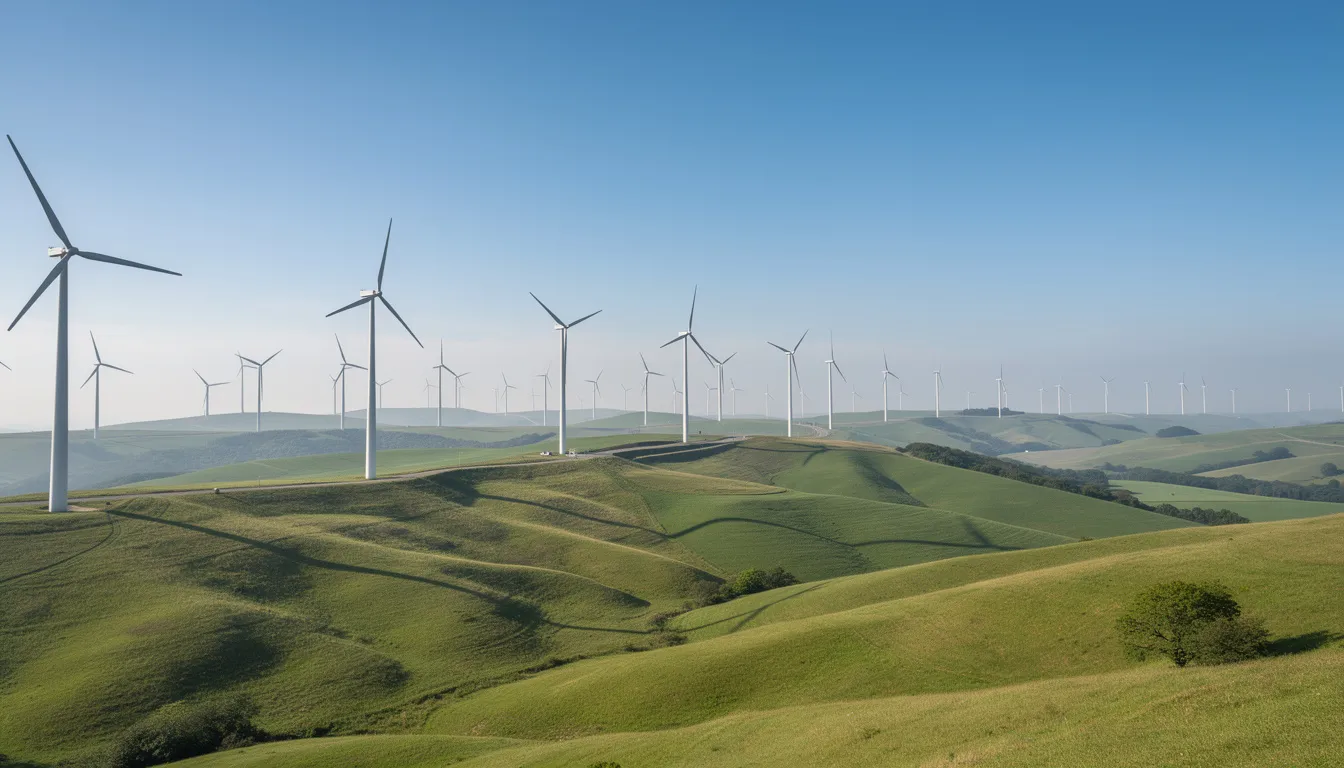
Onshore wind farms occupy some of the world’s windiest terrestrial landscapes. You’ll find them spread across the open plains of Texas and the US Midwest, where steady winds and vast acreage allow massive installations. Mountain passes like Altamont and Tehachapi in California funnel wind through narrow corridors, creating ideal conditions for wind energy production. Plateaus in Inner Mongolia host some of the world’s biggest wind farm complexes, while European ridgelines in countries like Spain, Germany, and Portugal capture strong prevailing winds.
The engineering of onshore turbines is relatively straightforward compared to offshore installations. Each turbine typically stands on a reinforced concrete foundation sized according to local geotechnical conditions, with the foundation countering uplift forces from both wind loads and rotor dynamics. Tubular steel towers rise 80-120 meters from these bases, accessed via simple gravel roads that construction crews and maintenance technicians use throughout the project’s life.
Project sizes vary enormously. Small community wind projects might install just 2-5 turbines generating a few megawatts—enough electricity for a rural town. At the other extreme, the largest onshore wind farm complexes exceed 1,000 MW across multiple phases. The Alta Wind Energy Center in California exemplifies this scale, featuring roughly 600 turbines across its various sections.
Key advantages of onshore wind:
-
Lower construction costs per MW than offshore alternatives
-
Easier access for repairs and routine maintenance
-
Ability to share land with agriculture—farmers can continue cultivation or grazing between turbines
-
Shorter development timelines from permitting to operation
-
Established supply chains and experienced workforce
Key challenges of onshore wind:
-
Visual impact on landscapes, with turbines visible for miles
-
Potential noise concerns for nearby residents (typically mitigated by 1-2 km setbacks)
-
Land-use conflicts in densely populated regions
-
More complex permitting processes due to local opposition in some areas
-
Wake effects reducing efficiency when turbines are sited too closely
Offshore Wind Farms
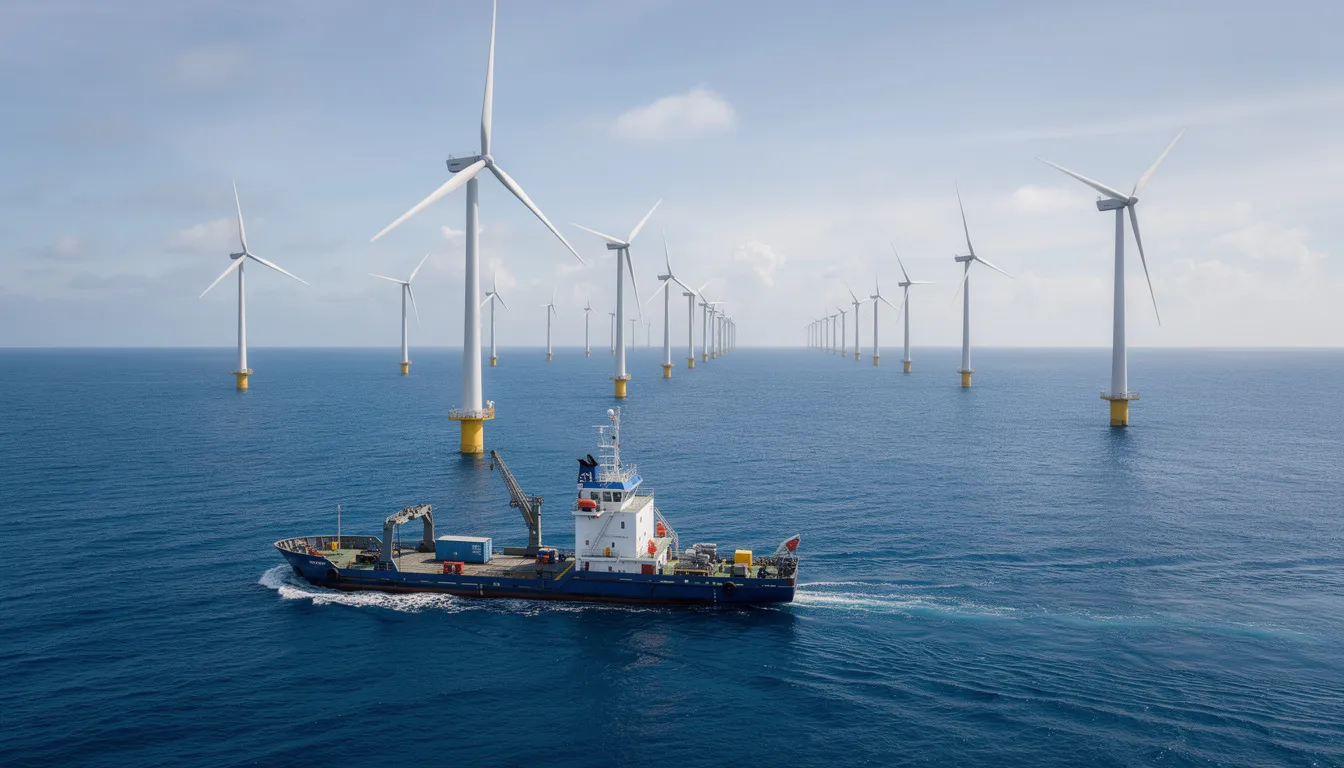
Offshore wind represents the frontier of wind energy development, with projects sited in coastal waters and large lakes to capture the strongest, most consistent winds available. Europe has led this sector since the early 2000s, with the UK, Germany, Denmark, and the Netherlands pioneering large-scale offshore wind deployment. The region’s relatively shallow North Sea and strong policy support created ideal conditions for the technology to mature.
Concrete examples illustrate the scale now possible. Hornsea 1 and Hornsea 2 in the UK North Sea together exceed 2.5 GW of capacity, making the Hornsea complex one of the world’s largest offshore wind installations. The Seagreen Offshore Wind Farm off Scotland’s coast adds another 1,075 MW to the UK’s portfolio. Meanwhile, the US East Coast is rapidly developing its offshore wind resources, with projects like Vineyard Wind (800 MW) marking the beginning of American offshore wind at commercial scale.
The engineering challenges of offshore wind are substantial. In shallow waters (typically up to 50-60 meters), developers install foundations such as monopiles (large steel tubes driven into the seabed), jacket structures (steel lattice frames), or gravity-base foundations (massive concrete structures that sit on the seabed). For deeper waters, floating platforms—including semi-submersible designs and spar buoys—allow offshore wind turbines located far from shore to access even better wind resources. Subsea cables connect turbines to offshore substations, which step up voltage before high-voltage AC or DC export cables carry the power to landfall.
Key advantages of offshore wind:
-
Stronger and more consistent winds yielding capacity factors up to 60%
-
Much larger turbines possible (10-15+ MW each) due to fewer transport constraints
-
Minimal noise or visual concerns for residents
-
Large-scale generation close to coastal population centers with high electricity demand
-
No land-use conflicts with agriculture or development
Key challenges of offshore wind:
-
Higher capital expenditure (CAPEX) and operating expenditure (OPEX)
-
Harsh marine environment causing corrosion and wear
-
Complex installation requiring specialized vessels like jack-up ships and cable-laying barges
-
Environmental considerations for marine ecosystems, fisheries, and seabird populations
-
Longer development timelines due to offshore-specific permitting requirements
Siting and Design Considerations
Good siting is the foundation of every successful wind farm project. Developers must balance wind resource quality, grid access, environmental constraints, and community acceptance—all factors that determine whether a project is economically viable and can secure the necessary permits to proceed.
The wind resource assessment process typically begins with wind atlases and mesoscale modeling to identify promising regions. However, these preliminary tools only tell part of the story. Developers typically install meteorological masts (met masts) or deploy LiDAR (Light Detection and Ranging) equipment for at least 1-2 years to measure on-site wind speeds and directions at hub height. This data allows accurate estimation of long-term energy production and helps identify any site-specific challenges like high turbulence or unusual wind shear.
Ideal sites share several characteristics: high average wind speed (typically 7-9 m/s at hub height for onshore, higher for offshore), low turbulence intensity, and favorable topography that channels or accelerates airflow. Open plains, coastal areas, and mountain passes tend to offer the best conditions. Sites near existing transmission infrastructure also reduce interconnection costs significantly.
Turbine layout optimization balances energy capture against construction costs. Spacing turbines too closely increases wake effects—where upstream machines slow the wind for those downstream—reducing overall farm efficiency by 10-20% or more. Typical layouts maintain 5-10 rotor diameters between turbines in the prevailing wind direction, with tighter crosswind spacing of 3-5 diameters. Software tools model thousands of potential configurations to maximize annual energy production while minimizing the cost of access roads, cabling, and collection infrastructure.
Key steps in wind farm development:
-
Wind resource assessment using atlases, mesoscale modeling, and on-site measurement
-
Layout optimization balancing wake losses against infrastructure costs
-
Grid interconnection planning and capacity studies
-
Environmental impact assessments covering wildlife, noise, and visual effects
-
Community consultation and stakeholder engagement
-
Permitting with local, regional, and national authorities
-
Land agreements including leases with landowners or seabed rights for offshore
-
Aviation and radar coordination for projects near airports or military installations
Electricity Grid and Transmission
Wind farms must connect to an electricity grid with sufficient available transfer capacity—otherwise, the power they produce has nowhere to go. In many regions, this connection challenge has become a significant bottleneck. The best wind resources often exist in remote areas far from population centers, requiring new transmission lines or upgrades to existing infrastructure.
Grid operators manage interconnection queues where proposed wind projects compete with other generators for limited capacity on transmission lines. In the United States, projects can wait years for interconnection studies and approvals, with queue backlogs exceeding 1,000 GW of proposed generation in some regions. This creates significant uncertainty for wind farm developers planning their investments.
Modern wind farms do more than simply push power onto the grid. They can actively support grid stability by contributing reactive power to maintain voltage levels, participating in frequency response services, and complying with grid codes that require fault ride-through capability during disturbances. These “grid-forming” capabilities make wind power plants increasingly valuable as traditional fossil fuel generators retire.
Large offshore wind farms face particular transmission challenges. Projects located 50-100+ kilometers from shore typically use offshore substations to collect and step up power before high-voltage AC (HVAC) or high-voltage DC (HVDC) export cables carry it to landfall. HVDC systems reduce losses over long distances but add converter station costs at both ends.
Grid integration considerations:
-
Available transmission capacity determines whether interconnection is feasible without upgrades
-
Interconnection queue processes can delay projects by several years in congested regions
-
Wind farms can provide ancillary services including reactive power and frequency response
-
Geographic diversity across multiple wind farms built in different locations smooths variability
-
Forecasting tools allow grid operators to predict wind output hours to days ahead
-
Energy storage and flexible generation help balance supply when wind changes rapidly
-
Cross-border “supergrid” connections can move power from windy to calm regions
Environmental and Landscape Impacts
The environmental case for wind power centers on its dramatically lower lifecycle greenhouse gas emissions compared to fossil fuels. Wind farms emit approximately 11 grams of CO2 equivalent per kilowatt-hour over their full lifecycle—including manufacturing, construction, operation, and decommissioning. Compare this to coal-fired power plants at roughly 820 g CO2/kWh, and the climate benefit becomes clear. Wind power does not release greenhouse gases during operation, nor does it produce air or water pollution, radioactive waste, or require fuel extraction.
Visual and landscape impacts represent the most common concern about onshore wind development. Modern wind turbines stand 80-150 meters tall with rotor diameters exceeding 100 meters, making them visible over long distances. Critics describe this as “industrializing” rural or coastal scenery. Night-time aviation warning lights add another visual element, though newer radar-activated systems reduce light pollution by illuminating only when aircraft approach.
Wildlife considerations—particularly bird and bat collisions with wind turbine blades—require careful attention during siting and operation. Research suggests collision rates of roughly 0.1-1 birds per GWh of electricity generated, far lower than mortality from building windows, vehicles, or domestic cats, but still a concern at sensitive sites. Mitigation measures include avoiding major migration corridors, curtailing turbine operation during peak bat activity periods, and using radar-assisted shutdown systems that detect approaching flocks.
Noise from wind turbines includes both mechanical sounds from gearboxes and generators and aerodynamic noise from blade tips moving through air. At typical setback distances of 300-500 meters or more, sound levels generally fall below 45 decibels—comparable to a quiet office. The scientific consensus, based on extensive research, does not support claims of significant health effects from wind turbine noise at these distances, though individual sensitivity varies.
End-of-life considerations have gained attention as early wind farms reach retirement age. Tower steel and nacelle components are highly recyclable (95%+ by weight), but composite wind turbine blades present challenges. Current solutions include co-processing blade materials in cement kilns, where they replace coal and raw materials, and the development of new thermoplastic resins that enable true blade recycling. Several manufacturers now offer recyclable blade designs for new installations.
Some research has identified localized microclimate effects around large wind farms—slight nighttime warming and daytime cooling near the surface due to enhanced mixing of atmospheric layers. These effects remain localized and represent redistribution of heat rather than net climate impact.
Key environmental points:
-
Lifecycle emissions approximately 11 g CO2/kWh versus 820 g CO2/kWh for coal
-
No operational air pollutants, water pollution, or radioactive waste
-
Visual impacts can be significant for onshore installations near communities
-
Bird and bat collision rates lower than many other human structures but require careful siting
-
Noise levels typically below 45 dB at standard setback distances
-
Blade recycling solutions emerging but remain a work in progress
-
Turbines have 25-30 year lifespans with most components highly recyclable
Effects on Power Systems and Reliability
Wind power is variable but increasingly predictable. Modern forecasting tools can predict wind farm output with reasonable accuracy hours to days ahead, allowing grid operators to schedule other generation resources and maintain power system reliability. The challenge lies not in moment-to-moment fluctuations—turbines ramp smoothly as wind speed changes—but in ensuring sufficient flexible resources are available when the wind dies down for extended periods.
Countries and regions with high wind penetration demonstrate that reliable operation is achievable. Denmark regularly generates 50%+ of its electricity from wind on windy days. Ireland’s grid has operated with instantaneous wind shares exceeding 70%. Texas—not typically associated with renewable energy leadership—saw wind provide over 10% of its annual electricity in 2022, with much higher shares during spring nights when wind blows strong and demand is low.
System operators maintain reliability through several strategies. Geographic diversity is crucial: spreading wind turbines located across wide areas reduces the chance of simultaneous low-wind conditions everywhere. Flexible natural gas plants can ramp quickly to fill gaps. Hydropower with reservoir storage provides both flexibility and energy storage. Demand response programs shift electricity consumption to match supply. Battery storage systems increasingly provide rapid response, though at higher cost than flexible generation.
Distributed wind generation offers some resilience advantages over centralized power plants. A single large fossil fuel or nuclear plant going offline removes substantial generation instantly, while individual wind turbines failing have minimal impact on overall farm output. However, extreme weather—including icing, hurricanes, or sustained calm periods—can affect wind production across regions simultaneously, requiring careful planning.
Real-world high-wind systems:
-
Denmark: Wind provides 50%+ of electricity on windy days; system maintains reliability through interconnections to neighbors
-
Ireland: Grid operates at 70%+ instantaneous wind penetration with careful frequency management
-
Texas (ERCOT): Wind exceeded 10% of annual generation in 2022; flexible gas plants provide backup
-
Germany: Wind and solar together exceeded 50% on many days in 2023; European grid integration helps balance
Radar, Radio, and Communication Interference
Rotating wind turbine blades can appear as moving targets on radar systems, potentially complicating detection of aircraft or weather phenomena. This issue affects military radar, air traffic control systems, and weather radar installations—all of which use Doppler techniques to track moving objects.
Wind projects near radar installations may face delays, modifications, or outright rejection during permitting. In the United States, thousands of megawatts of proposed wind farm projects have historically faced scrutiny due to Department of Defense radar concerns. The Federal Aviation Administration also reviews projects near airports, sometimes requiring modified layouts or reduced turbine heights.
Mitigation solutions have evolved significantly. Software upgrades to radar systems can filter out stationary-pattern clutter from wind turbines. Improved signal processing algorithms distinguish between turbine blade signatures and actual targets. Alternative radar siting—moving installations to locations with clear lines of sight around wind farms—provides a physical solution. Some projects use “blanking” zones where radar ignores returns from known wind farm locations. Experimental stealth coatings and blade designs aim to reduce radar cross-sections, though these remain largely in development.
Large metal structures can also affect radio and television reception by reflecting or blocking signals. Predictive electromagnetic modeling during the siting process can identify potential interference zones, allowing developers to adjust turbine locations or provide mitigation (like signal boosters) for affected properties.
Radar and communication considerations:
-
Rotating blades appear as moving targets on Doppler radar systems
-
Military, air traffic control, and weather radar may all be affected
-
Projects near radar installations often face additional permitting scrutiny
-
Software and hardware upgrades can mitigate most interference issues
-
Careful siting avoids placing turbines in critical radar coverage zones
-
Radio and TV interference can be predicted and mitigated during planning
Economic, Social, and Agricultural Aspects
Wind farm economics feature high upfront capital costs offset by very low operating expenses and long operational lifetimes of 25-30 years. Onshore wind projects typically cost $1.3-2 million per MW of capacity to build, while offshore wind runs higher at $3-4 million per MW due to marine installation complexity. Once operational, fuel costs are zero—the wind is free—and maintenance costs are modest, primarily covering routine inspections, component replacements, and occasional major repairs.
The resulting levelized cost of energy (LCOE) has fallen dramatically. In prime US sites, onshore wind LCOE dropped to $26-50 per MWh by 2023, making it competitive with or cheaper than new coal and nuclear generation in most markets. Offshore wind LCOE runs higher at $50-100 per MWh but continues declining as turbine sizes increase and installation techniques improve.
Revenue streams for wind farm operators include wholesale electricity sales, long-term power purchase agreements (PPAs) with utilities and corporations seeking renewable energy, and government auction contracts that guarantee prices for fixed periods. In some markets, renewable energy certificates or production tax credits provide additional income. These various mechanisms help wind farm developer companies secure financing for capital-intensive projects.
The wind industry creates substantial employment. Globally, wind power supported approximately 1.1 million jobs by 2023, spanning manufacturing, construction, operations, and maintenance. Wind turbine technician consistently ranks among the fastest-growing occupations in the US, with workers climbing towers to service equipment and diagnose issues. Offshore wind projects add port development, specialized vessel crew, and underwater cable installation jobs.
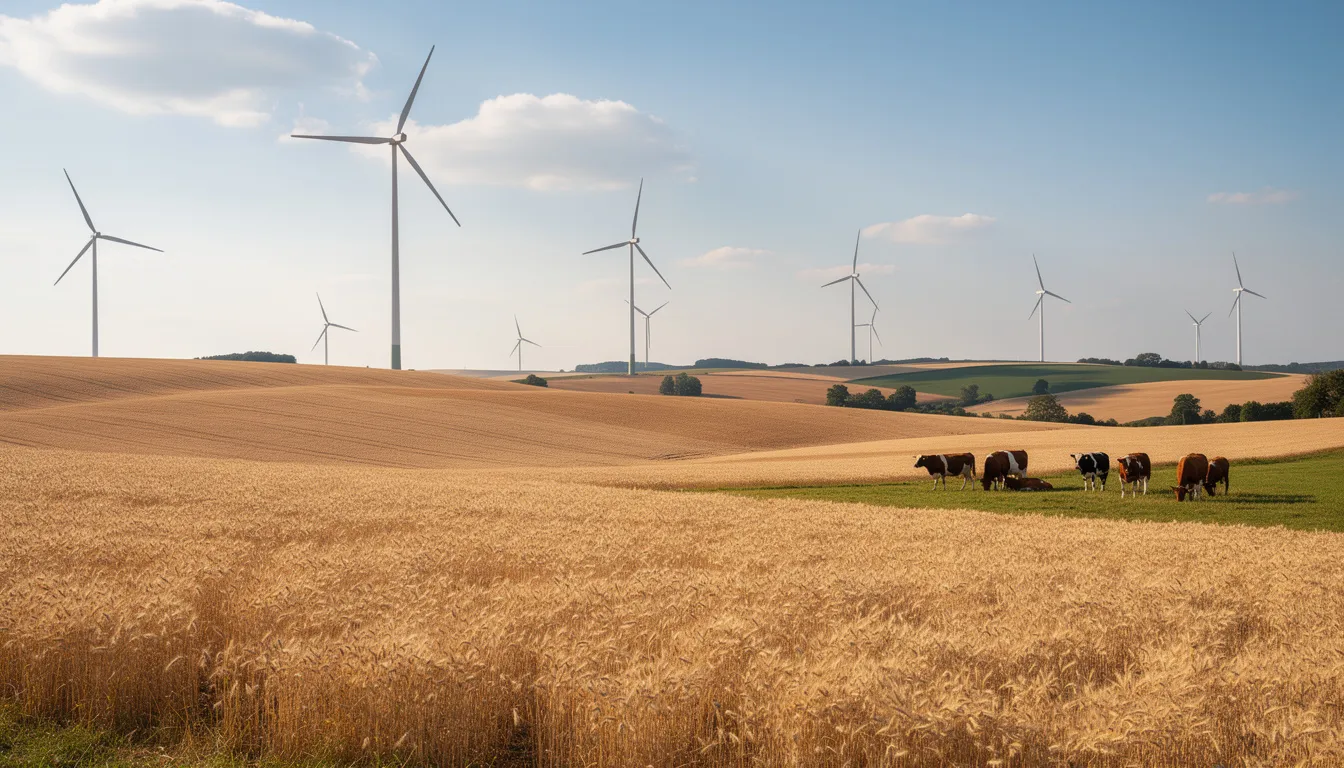
Community impacts include both benefits and concerns. Landowners hosting turbines typically receive annual lease payments of $3,000-8,000 per MW of capacity—meaningful income for farmers and ranchers. Local governments collect property tax revenue that funds schools and services. Many wind farm projects establish community benefit funds providing grants for local initiatives. However, some residents express concerns about tourism impacts, property values, and the fairness of siting decisions that place turbines near some homes but not others.
Agriculture and wind coexist effectively. Turbines on farmland occupy minimal footprint—typically less than 1% of the land area—allowing continued cultivation or grazing between towers. Some research suggests the turbulence created by spinning blades slightly alters local microclimates, with modest temperature and humidity changes that may reduce frost risk for some crops. Wind farms built on agricultural land often provide farmers with diversified income while maintaining their traditional operations.
Economic highlights:
-
Onshore capital costs: $1.3-2M per MW; offshore: $3-4M per MW
-
Onshore LCOE: $26-50/MWh (competitive with fossil fuels in many markets)
-
Typical landowner lease payments: $3,000-8,000 per MW annually
-
Global wind industry employment: ~1.1 million jobs in 2023
-
Wind turbine technician: fastest-growing US occupation category
-
Turbines occupy <1% of farmland footprint, allowing continued agriculture
Future Trends and Key Takeaways
Wind farms have become central to long-term climate and energy strategies worldwide. Installed capacity continues rising rapidly, with projections suggesting wind could provide 35% of global electricity by 2050—up from under 8% today. The technology trajectory points toward ever-larger turbines: offshore machines now reach 15 MW ratings with 220-meter rotor diameters, and 18-24 MW designs are expected by 2026. This scale-up dramatically reduces the cost per MWh as each turbine produces more energy from the same installation effort.
Hybrid power plants combining wind with solar and battery storage represent an emerging trend. These facilities can use shared grid connections more efficiently, providing steadier output than either wind or solar alone. A wind-solar hybrid might generate during sunny, calm afternoons (solar) and windy nights (wind), with batteries smoothing transitions and providing grid services. Such configurations improve energy security by reducing dependence on any single traditional energy source.
The offshore wind frontier continues expanding. Floating platforms now enable projects in waters 60+ meters deep, opening vast areas previously inaccessible to fixed-foundation development. The US Inflation Reduction Act and European Green Deal are spurring massive new wind farms investment, with 40+ GW of US capacity and similar expansion across Asia expected by 2030. Innovations in digital monitoring enable predictive maintenance that catches problems before failures occur, boosting turbine availability to 98%+ in well-managed fleets.
Material and end-of-life considerations are receiving increased attention. The industry is developing recyclable blade materials using thermoplastic resins rather than thermoset composites. Circular design principles aim to make future turbines fully recyclable at end of life. These efforts address legitimate concerns about blade waste while preserving wind power’s strong lifecycle environmental advantages.
Regional “supergrids” connecting distant wind resources across borders help address variability challenges. When wind is calm in one region, it’s often blowing elsewhere—and high-capacity transmission can move clean power where it’s needed. Europe’s North Sea grid concept and planned Atlantic offshore connections exemplify this system-level thinking.
Key takeaways from this article:
-
A wind farm is a collection of wind turbines grouped together to produce electricity at scale for the grid
-
Wind turbines convert kinetic energy from wind into mechanical energy and then electrical energy through electromagnetic generators
-
Onshore wind farms are cheaper and easier to build; offshore wind farms access stronger winds and use larger turbines
-
Good siting requires strong wind resources, grid access, environmental care, and community engagement
-
Wind power produces minimal greenhouse gas emissions compared to fossil fuels (11 g vs. 820 g CO2/kWh)
-
Variable output is manageable through forecasting, geographic diversity, flexible generation, and storage
-
Economics have improved dramatically, with wind now competitive with traditional energy sources in many markets
-
Future trends include larger turbines, floating offshore platforms, hybrid plants, and recyclable materials
The trajectory of wind energy development points clearly toward continued growth. How many wind farms will dot our landscapes and seascapes by 2050? The answer depends on policy choices, community acceptance, and continued technological progress. What’s certain is that wind power has proven itself a mature, cost-effective, and environmentally beneficial technology that deserves a central role in decarbonizing our power production. The challenge ahead lies not in whether wind works—it clearly does—but in planning carefully, engaging communities meaningfully, and stewarding the land and marine environments responsibly as we build the clean energy system the climate demands.