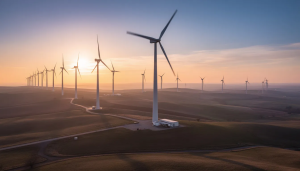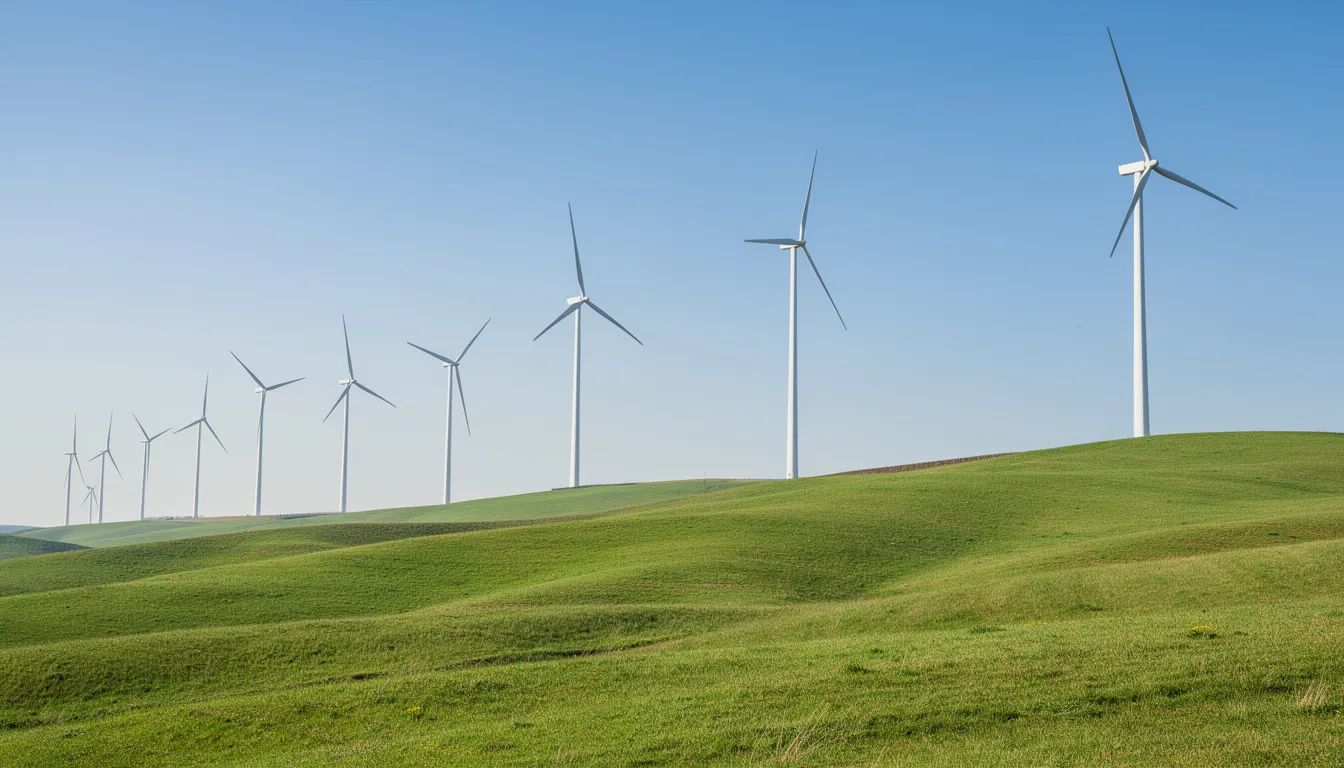
A wind farm is more than a collection of tall white towers spinning in the breeze. It’s a sophisticated power generation facility that transforms the kinetic energy of moving air into electricity for millions of homes and businesses.
In this comprehensive guide, you’ll learn exactly how wind farms work, where they’re built, and why they’ve become a cornerstone of the global transition to clean energy. Whether you’re researching renewable energy investments, studying sustainable development, or simply curious about those turbines on the horizon, this article breaks down everything you need to know.
Overview of Wind Farms
A wind farm—also called a wind park or wind power plant—is a cluster of wind turbines strategically positioned in the same location to generate grid-connected electricity. Individual turbines typically range from 600 kW to 15 MW in capacity, working together to feed power into regional transmission networks.
Modern wind farms can span anywhere from a few megawatts to multi-gigawatt complexes covering thousands of square kilometers. These installations represent a key pillar of global decarbonization strategies, providing clean electricity without burning fossil fuels or producing direct greenhouse gas emissions during operation.
Here are key facts about large scale wind farms:
-
Gansu Wind Farm in China: Located in Gansu Province, this massive wind power installation is planned to reach 20,000 MW by 2025, making it the largest wind farm on Earth when complete.
-
Hornsea 2 in the UK: Commissioned in 2022 with 1,386 MW capacity, this offshore wind farm ranks among the world’s largest offshore wind energy projects, powering over 1.3 million homes.
-
Alta Wind Energy Center in California: One of North America’s largest onshore wind farms, generating over 1,500 MW from hundreds of turbines across the Tehachapi Mountains.
The contrast between onshore wind farms and offshore installations is significant. Onshore projects typically use turbines rated between 2–6 MW with hub heights of 80–160 meters, while offshore wind turbines can exceed 15 MW with rotor diameters approaching 260 meters. Offshore wind farms generally achieve higher capacity factors (45–55% versus 35% onshore) due to stronger, more consistent winds over the open sea.
Wind farms feed electricity into regional transmission systems through substations that step up voltage for efficient long-distance delivery. To address the inherent variability of wind power, operators increasingly combine wind generation with battery storage, pumped hydro, or complementary solar installations, ensuring reliable power supply even when the wind speed drops.
How a Wind Farm Works
At its core, a wind farm converts the kinetic energy of moving air into electrical power through a straightforward energy conversion chain. Wind flows across turbine blades, causing them to rotate and spin a generator that produces electricity. This power then travels through transformers and transmission lines to reach consumers on the electric grid.
The basic principle is simple: faster wind means more energy produced. However, the engineering behind modern wind turbines work involves sophisticated components working in concert.
Core Components of a Wind Turbine
-
Tower: Steel or concrete structures typically 80–160 meters tall (onshore) or over 200 meters (offshore) that elevate the rotor above ground-level turbulence into steadier, faster winds
-
Nacelle: The protective housing atop the tower containing the gearbox (or direct-drive generator), control systems, anemometer for wind speed measurement, and yaw mechanisms that orient the turbine into the wind
-
Rotor and Blades: Three aerodynamically shaped blades—often exceeding 100 meters each on large turbines—attached to a central hub that captures wind energy and initiates rotation
-
Pitch and Yaw Systems: Hydraulic or electric actuators that adjust blade angle to optimize energy capture and rotate the nacelle to face prevailing winds
Electrical Collection and Transmission
The electrical layout of a typical wind farm connects individual turbines through a medium-voltage collection system. On onshore wind farms, this usually involves underground cables operating at 33–66 kV linking turbines to a central substation. Offshore projects use similar voltage levels but rely on subsea cables running along the seabed.
Substations perform the critical function of stepping up voltage—typically from 33–66 kV to 132–400 kV—for efficient long-distance transmission. From there, power flows through overhead transmission lines (onshore) or high-voltage export cables (offshore) to connect with the broader grid. Large offshore wind farm installations often require dedicated offshore platforms housing transformers and switchgear before the export cables run to shore.
Modern wind farms employ sophisticated control systems to maintain grid stability and maximize output. SCADA (Supervisory Control and Data Acquisition) networks monitor every turbine in real time, while power curtailment capabilities allow operators to reduce output during periods of low demand or grid congestion. Wind generators must also comply with grid codes requiring fault ride-through capability, frequency support, and reactive power control to maintain stable operations across the transmission network.
Siting Considerations for Wind Farms
Successful wind projects require a delicate balance of favorable wind resources, accessible grid connections, environmental compatibility, and community acceptance. Get any of these wrong, and even the most promising site can become an expensive failure.
Wind Resource Assessment
Developers typically conduct long-term wind measurements spanning 1–3 years using meteorological masts or ground-based LiDAR systems before committing to construction. This data, combined with mesoscale modeling, allows engineers to estimate annual energy production and expected capacity factor with reasonable confidence.
Key wind resource criteria include:
-
Average wind speeds exceeding 7–8 m/s at hub height for utility-scale viability
-
Low turbulence intensity to reduce mechanical stress on components
-
Consistent wind direction patterns for optimal turbine layout
-
Minimal extreme wind events that could damage equipment
Terrain and Site Characteristics
For onshore sites, topography significantly influences turbine placement and performance. Ridges, plateaus, and mountain passes can accelerate wind flow, while forested areas and complex terrain increase turbulence and require higher hub heights. The difference between a good site and a marginal one often comes down to understanding local surface roughness effects.
Offshore wind projects face different challenges. Water depth determines foundation type: fixed-bottom structures (monopiles or jackets) remain cost-effective up to approximately 60 meters, while floating platforms become necessary in deeper waters. Seabed conditions affect foundation design and cable installation, while distance from shore impacts both cable costs and the logistics of construction and operations.
Non-Wind Constraints
Beyond wind resources, numerous factors influence site selection:
-
Land use conflicts with agriculture, protected areas, or traditional fishing grounds
-
Aviation corridors and radar interference zones requiring federal agencies consultation
-
Shipping lanes and navigation routes for offshore projects
-
Setback distances from residential areas (typically 500–2,000 meters depending on jurisdiction) to address noise and shadow flicker concerns
-
Visual impact considerations, particularly near tourism areas or communities with strong landscape attachments
Electricity Grid and Transmission Considerations
Grid integration frequently emerges as the main bottleneck for new wind projects. Even sites with excellent wind resources can stall if the local transmission network lacks available transfer capability or faces severe congestion.
-
Interconnection queues have grown substantially in major markets; U.S. regional transmission organizations reported multi-year backlogs as of the mid-2020s, with projects waiting 3–5 years or longer for grid connection approval
-
European network codes establish standardized technical requirements but still require extensive coordination between developers, grid operators, and regulatory bodies
-
Turbine spacing follows established rules: typically 3–5 rotor diameters perpendicular to prevailing winds and 6–10 diameters downwind to minimize wake losses while balancing land and cable costs
-
Collection systems use medium-voltage circuits (33–66 kV) connecting strings of turbines to substations; large offshore projects may require multiple collector platforms before power routes to shore
-
High wind penetration creates grid stability challenges requiring flexibility solutions: geographic diversity across regions, demand-side management, battery storage, and interregional transmission “supergrids” that smooth output variations
Types of Wind Farms
Wind farms are primarily classified by their location relative to the coast and water depth. The three main categories—onshore, nearshore, and offshore—each present distinct cost structures, infrastructure requirements, visual impacts, and capacity factors.
Understanding these differences helps explain why developers choose particular locations and why the wind industry continues expanding into more challenging environments.
Onshore Wind Farms
Onshore wind farms are projects located on land, typically more than 3 km from the coastline, operating entirely within terrestrial wind regimes. These installations still account for the majority of global installed wind capacity, representing roughly 80% of cumulative wind power deployment.
Notable onshore examples include:
-
Jiuquan/Gansu Wind Farm in northwestern China, the world’s largest onshore wind installation
-
Alta Wind Energy Center in California’s Tehachapi Pass, generating over 1,500 MW
-
Muppandal Wind Farm in Tamil Nadu, India, one of Asia’s largest clusters
Common onshore turbine ratings range from 2–6 MW as of the mid-2020s, with hub heights between 80–160 meters. Developers increasingly deploy larger rotors on taller towers at low-to-medium wind sites, maximizing energy capture from the available resource.
Advantages of onshore wind farms:
-
Easier construction and maintenance access via roads and existing infrastructure
-
Mature supply chains with manufacturing facilities located globally
-
Lower capital costs per MW compared to offshore alternatives
-
Faster development timelines from permitting to operations
Challenges facing onshore development:
-
Land availability constraints, particularly in densely populated regions
-
Visual and noise concerns from nearby communities
-
Wildlife impacts, especially on birds and bats in migration corridors
-
Grid constraints requiring expensive transmission upgrades in remote high-resource areas
Nearshore Wind Farms
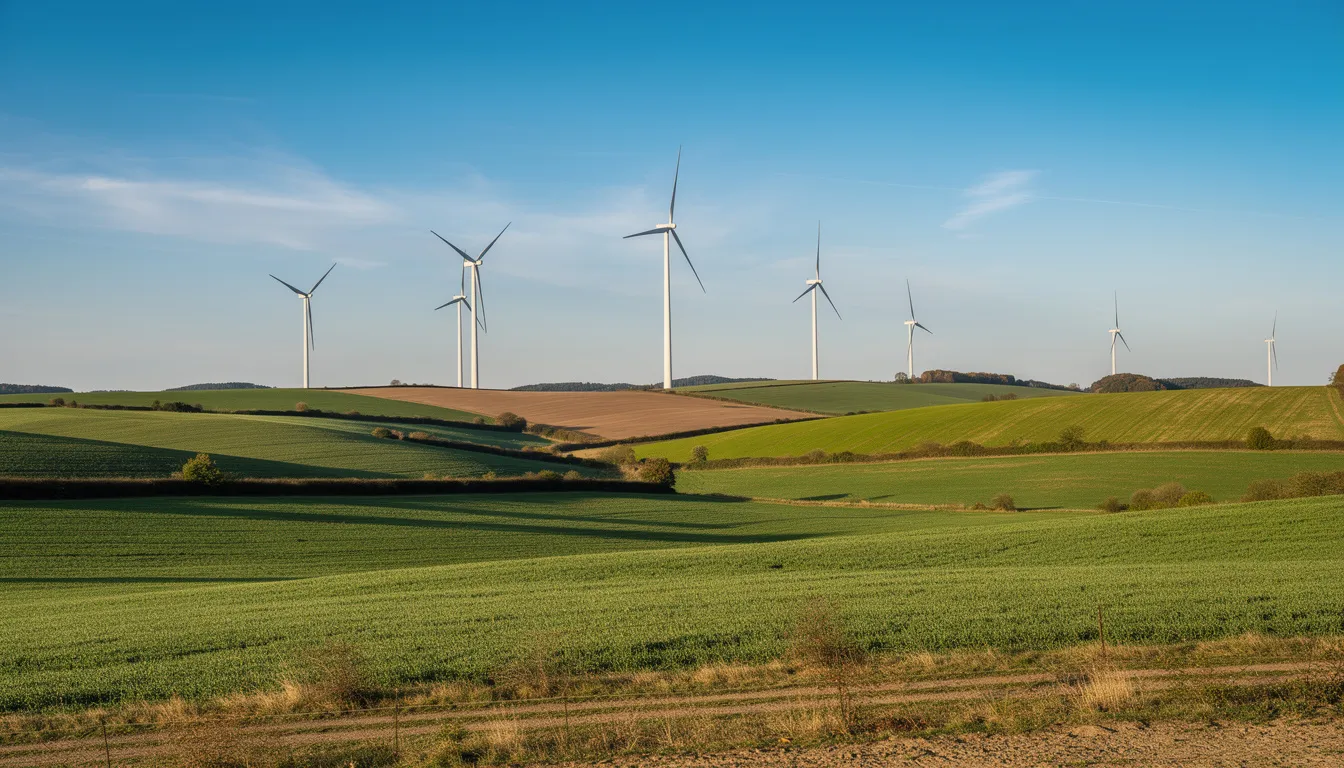
Nearshore wind farms occupy a transitional zone—either on land within roughly 3 km of the coastline or in very shallow coastal waters close to shore. These sites experience hybrid wind regimes influenced by both land and sea breezes.
-
Nearshore locations often capture higher wind speeds than purely inland sites while retaining relatively straightforward grid connection and construction logistics
-
Coastal projects along the North Sea in Denmark and the Baltic coast in Germany exemplify this approach, benefiting from strong maritime winds without venturing into deep waters
-
These sites face specific permitting challenges related to coastal ecosystems, tourism interests, and navigation routes
-
Visual impact concerns can be more pronounced than for distant offshore projects since turbines remain clearly visible from populated coastal areas
-
Development typically requires working closely with local fishing communities and environmental agencies to address concerns
Offshore Wind Farms
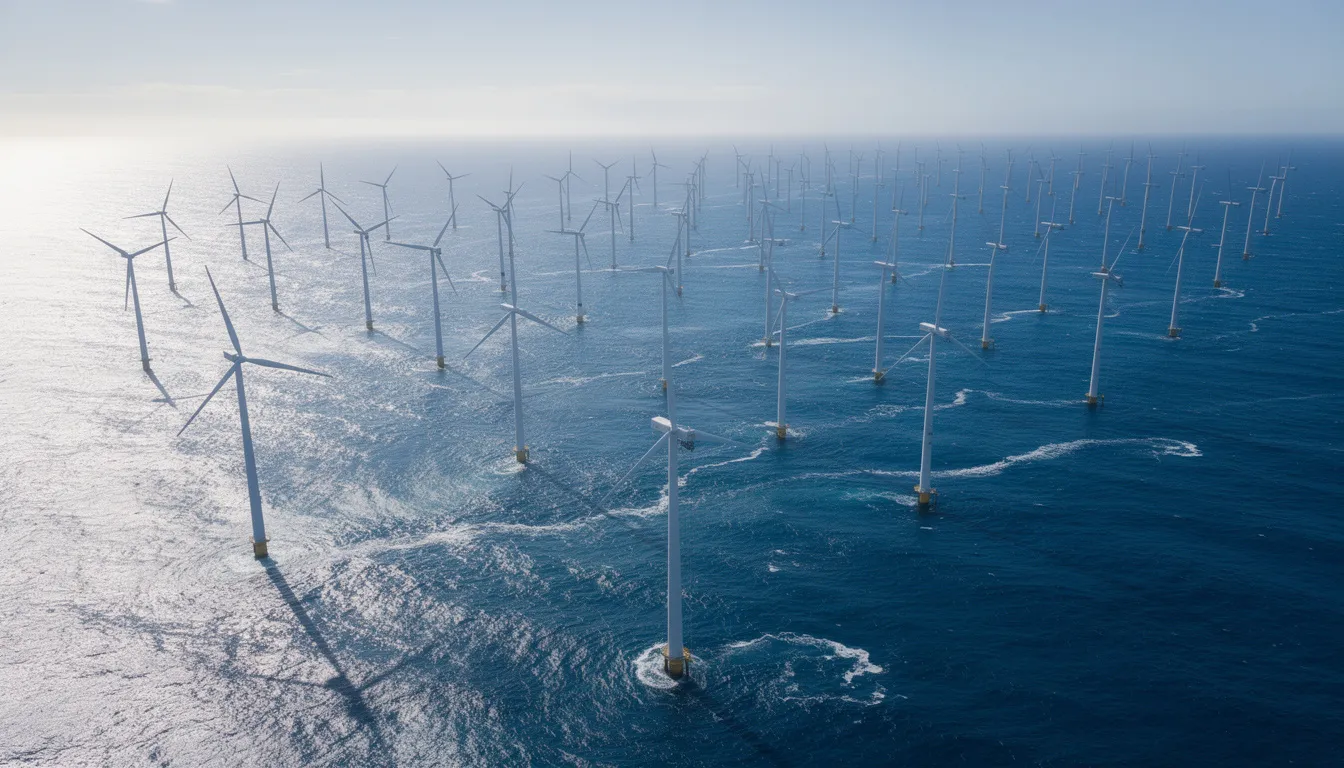
Offshore wind farms consist of turbine arrays located in the open sea, often tens of kilometers from shore. These environments offer stronger, more consistent winds with lower turbulence—ideal conditions for generating electricity at high capacity factors.
Major offshore wind energy projects include:
-
Hornsea 1 and 2 in the UK North Sea, with Hornsea 2 reaching 1,386 MW upon commissioning in 2022
-
Hollandse Kust Zuid in the Netherlands, a subsidy-free project demonstrating offshore wind’s cost competitiveness
-
Dogger Bank, a multi-phase UK project that will exceed 3,600 MW when complete, generating enough clean electricity to power six million homes
Offshore wind turbines have grown dramatically in size, with current models reaching 12–15 MW per unit and rotor diameter spanning 200–260 meters. Foundation types vary by water depth: monopiles dominate in shallow waters under 30 meters, jacket foundations suit intermediate depths to 60 meters, and floating platforms enable development in deeper waters beyond fixed-bottom limits.
Key advantages of offshore wind:
-
High capacity factors often exceeding 45–55%, significantly above typical onshore performance
-
Reduced visual and noise impacts on coastal communities
-
Large contiguous development areas without land use conflicts
-
Stronger, steadier winds at hub heights over 200 meters
Main challenges for offshore development:
-
Higher capital and operating costs due to marine construction complexity
-
Specialized vessel requirements and weather-dependent installation windows
-
Complex subsea cabling and grid connection infrastructure
-
Stringent environmental assessments addressing marine ecosystems and navigation
-
Greater distance to federal waters in some jurisdictions, requiring lengthy permitting processes

Experimental, Emerging, and Proposed Wind Farms
Beyond conventional projects, experimental and pre-commercial wind farms serve as testing grounds for new turbine technologies, innovative layouts, and advanced control strategies. These installations push the boundaries of what’s technically and economically feasible.
Floating offshore wind represents the most significant emerging technology. Unlike fixed-bottom foundations limited to waters under 60 meters, floating platforms can access the 80% of offshore wind resources located in deeper zones. Early demonstration projects have proven the concept works:
-
Hywind Scotland, commissioned in 2017 with 30 MW from five turbines, became the world’s first commercial-scale floating wind farm
-
Kincardine Offshore Windfarm in Scotland expanded on this success with larger turbines
-
Pre-commercial arrays off Portugal and Japan are testing different floating platform designs for regional conditions
Research projects are also exploring airborne wind energy systems using tethered drones or kites to capture high-altitude winds, though commercial deployment remains years away. Mixed-technology farms combining different turbine sizes or integrating solar PV within the same site offer another avenue for optimizing land use and grid connection assets.
Major national build-out programs are driving the growing industry forward:
-
China targets over 1,000 GW of combined wind and solar capacity by 2030
-
The European Union’s offshore renewable energy strategy aims for 300 GW of offshore wind by 2050
-
The United States has set goals for 30 GW of offshore wind by 2030, with early projects advancing in federal waters off New England and other coastal regions
-
India plans 140 GW of wind capacity by 2030 as part of broader climate change commitments
Not all proposed projects reach completion. Grid constraints, permitting delays, cost inflation, and local opposition have caused cancellations and deferrals. Successful development requires thorough feasibility assessments spanning resource quality, economic viability, and environmental compatibility—a process that can take years before construction begins.
Environmental and Landscape Impacts
Wind farms generate electricity with very low operational greenhouse gas emissions, making them a critical tool for addressing climate change. However, like any energy infrastructure, they create localized environmental and visual impacts that require careful management.
Lifecycle Emissions and Carbon Footprint
Modern life-cycle assessments show that wind power produces roughly 10–20 grams of CO₂-equivalent per kilowatt-hour over its full lifecycle—from manufacturing through decommissioning. Compare this to coal-fired generation at 400–800 g CO₂/kWh, and the climate benefits become clear. The energy produced during a typical 25-year operating life repays the carbon “debt” from manufacturing within 6–12 months.
Land Use and Visual Impacts
Despite the imposing size of modern turbines, wind farms occupy surprisingly little land permanently. Turbine pads, access roads, and substations typically consume less than 1% of the total project area. The remaining land remains available for agriculture, grazing, or conservation uses—a key driver for rural landowners who receive lease payments while continuing farming operations.
Visual impact remains subjective but significant. Turbine heights exceeding 200 meters make installations visible across large distances. Shadow flicker—the flickering light effect when rotating blades pass between the sun and observers—affects properties within several hundred meters. Most jurisdictions require minimum setback distances (typically 500–2,000 meters) from dwellings to address noise and visual concerns.
Wildlife Considerations
Bird and bat collisions represent the most studied wildlife concern. Mortality rates vary substantially by region, species, and site characteristics. Raptors face elevated risks at sites along migration corridors or near nesting areas, while certain bat species appear attracted to turbines, particularly during late summer migration.
Mitigation measures include:
-
Careful turbine siting to avoid sensitive habitats and flight paths
-
Seasonal curtailment during peak migration periods
-
Radar-activated shutdown systems that detect approaching flocks
-
Ongoing monitoring and adaptive management based on observed mortality
Materials and End-of-Life Challenges
Wind turbines require substantial quantities of steel, concrete, and copper. Some generator designs also use rare earth elements, raising concerns about supply chain sustainability. While most turbine components are readily recyclable, large composite blades present challenges—their fiberglass and resin construction resists conventional recycling processes.
Industry research is advancing recyclable blade materials, with several manufacturers now offering designs using thermoplastic resins that can be broken down and reused. Blade recycling facilities have begun operating in Europe and North America, though capacity remains limited relative to the growing volume of decommissioned components.
Effects on Power Grid and System Reliability
-
High shares of wind generation fundamentally change power system operations, requiring grid operators to manage variability, limited dispatchability, and reduced mechanical inertia from retiring conventional plants
-
Grid codes now mandate that wind farms provide fault ride-through capability, voltage and frequency support, and active power control to maintain system stability
-
Solutions to variability include geographic diversity (spreading wind farms across regions with different weather patterns), interconnections between markets, demand-side management, energy storage (batteries, pumped hydro), and flexible backup generation
-
Large, distributed wind arrays prove less vulnerable to single-point failures or targeted disruptions than centralized thermal plants, though they require robust transmission infrastructure to deliver power to load centers
-
Curtailment—temporarily reducing wind output—sometimes becomes necessary during periods of low demand or transmission constraints, representing lost generation revenue but maintaining grid stability
Radar, Radio, and Communication Interference
-
Large rotating blades can reflect and Doppler-shift radar signals, potentially affecting military, weather, and air traffic control radar performance depending on frequency bands, distance, and turbine layout
-
Mitigation options include adjusted radar siting, advanced software filtering algorithms, upgraded radar technologies with improved clutter rejection, and experimental stealth blade coatings
-
Planning processes in most countries require mandatory consultation with aviation and defense authorities; federal agencies map exclusion zones around critical radar installations where wind development is restricted or requires extensive mitigation
-
Wind farms can sometimes cause localized interference with radio, television reception, or point-to-point microwave links, though effects are generally predictable using propagation models and manageable through careful layout or alternative signal routing
Impacts on Agriculture and Local Microclimate
-
Onshore wind farms frequently coexist with agricultural operations, with turbines and access roads occupying only a small fraction of total area while farming continues on surrounding land
-
Research indicates turbine wakes create localized turbulence that can slightly alter ground-level microclimates—modest nighttime warming and daytime cooling have been observed directly under and downwind of operating turbines
-
Potential agricultural implications include reduced frost risk for certain crops, minor changes in soil moisture or evaporation rates, and effects on pest and disease pressure that warrant continued field research
-
Socio-economic benefits for rural communities include substantial land lease payments (often $5,000–$15,000 per turbine annually) and community benefit funds supporting local infrastructure, schools, or services
-
Many farmers in Grant County and similar rural areas view wind development as a reliable supplemental income source that complements rather than displaces agricultural production
Offshore Wind Farms and Marine Ecosystems
-
Offshore wind development interacts with marine life from seabed organisms to surface-feeding seabirds, requiring comprehensive environmental assessment at every project stage
-
Construction impacts include pile-driving noise (potentially harmful to marine mammals), increased vessel traffic, and temporary seabed disturbance; typical mitigation measures include seasonal timing restrictions, bubble curtains for noise abatement, and marine mammal observer protocols
-
Long-term ecological effects show mixed patterns: foundations create artificial reef habitat attracting fish and invertebrates, while safety exclusion zones effectively create no-take marine protected areas where fishing pressure decreases
-
Studies in the North Sea and East Asia have documented both positive changes (increased fish biomass around structures) and negative effects (displacement of sensitive species, altered bird flight paths)
-
Ongoing monitoring and adaptive management, coordinated with national marine agencies and environmental groups, helps balance renewable energy goals with marine ecosystem protection and sustainable development objectives
Socio-Economic Aspects and Future Outlook
Wind farms represent far more than electricity generators—they’re engines of economic development, job creation, and regional transformation. The wind industry has grown from a niche technology into a major global sector employing over 1.1 million workers worldwide as of 2023.
Employment and Economic Development
The wind sector creates jobs across diverse categories:
-
Manufacturing: Production of towers, blades, nacelles, and components in factories across major wind regions
-
Construction and installation: Site preparation, foundation work, turbine erection, and electrical infrastructure
-
Operations and maintenance: Ongoing turbine monitoring, repairs, and optimization requiring skilled technicians
-
Grid and port infrastructure: Transmission upgrades, substation construction, and specialized port facilities for offshore logistics
-
Supporting services: Resource assessment, environmental consulting, project development, legal services, and financing
Major wind regions have developed specialized workforce training programs. Technical colleges in North Sea countries, the U.S. Midwest and coastal states, India, and China offer certifications for wind turbine technicians—one of the fastest-growing occupations in the energy sector. These programs create pathways to well-paying careers for workers in communities transitioning away from fossil fuel industries.
Policy Frameworks Driving Growth
Government policies remain a key driver of wind deployment. National renewable targets for 2030 and 2050 provide long-term market visibility, while specific mechanisms reduce investment risk:
-
Auction schemes competitively allocate development rights, driving down costs
-
Contracts for difference (CfDs) guarantee revenue stability for generators
-
Tax incentives like production tax credits and investment tax credits accelerate private investment
-
Renewable portfolio standards require utilities to source specified percentages from clean energy
These frameworks have contributed to dramatic cost reductions. The levelized cost of energy from onshore wind has fallen to $30–60 per megawatt-hour in favorable locations, making it cost-competitive with new fossil fuel generation in most markets.
Technology Trends for the Next Decade
The wind industry continues advancing rapidly:
-
Larger, more efficient turbines: Rotor diameters may exceed 300 meters by 2030, capturing more energy from larger swept areas
-
Hybrid plants: Combining wind with solar PV and battery storage on shared grid connections optimizes infrastructure and provides steadier output
-
Digital optimization: AI-powered controls, predictive maintenance using data analytics, and digital twins reduce operating costs and increase availability
-
Floating offshore expansion: Unlocking deep-water resources that represent the majority of global offshore wind potential
-
Improved recyclability: Next-generation blade materials designed for end-of-life recovery and reuse
The Path Forward
Wind farms stand at the center of the global transition to net-zero emissions. Industry projections suggest cumulative installed capacity could reach 3 terawatts by 2030—triple current levels—driven by climate commitments and improving economics.
This growth enhances energy security by diversifying generation sources away from imported fossil fuels, while transforming power systems worldwide. The sun may not always shine and the wind may not always blow, but strategic geographic distribution, storage integration, and transmission expansion are solving the intermittency challenge.
For communities, investors, and policymakers interested in the energy transition, understanding how wind farms work—and their role in a sustainable future—has never been more important.
Wind power has evolved from experimental technology to economic mainstream. The question is no longer whether wind will play a major role in our energy future, but how quickly we can build the infrastructure to capture this abundant, clean resource.